Nanjing rewards travelers who stop treating its famous names as one compact old city. The useful plan has four clusters: **Zhongshan Mountain** in the east; **Xuanwu Lake, Jiming Temple and the Ming wall** in the north; **the museums and republican-era center** around Xinjiekou; and **Laomendong with the Qinhuai area** in the south.
Give the city two complete days, stay near Xinjiekou or the north side of the center, and choose one cluster per half-day. The mistake that ruins otherwise sensible itineraries is crossing Nanjing several times to chase isolated checklists.
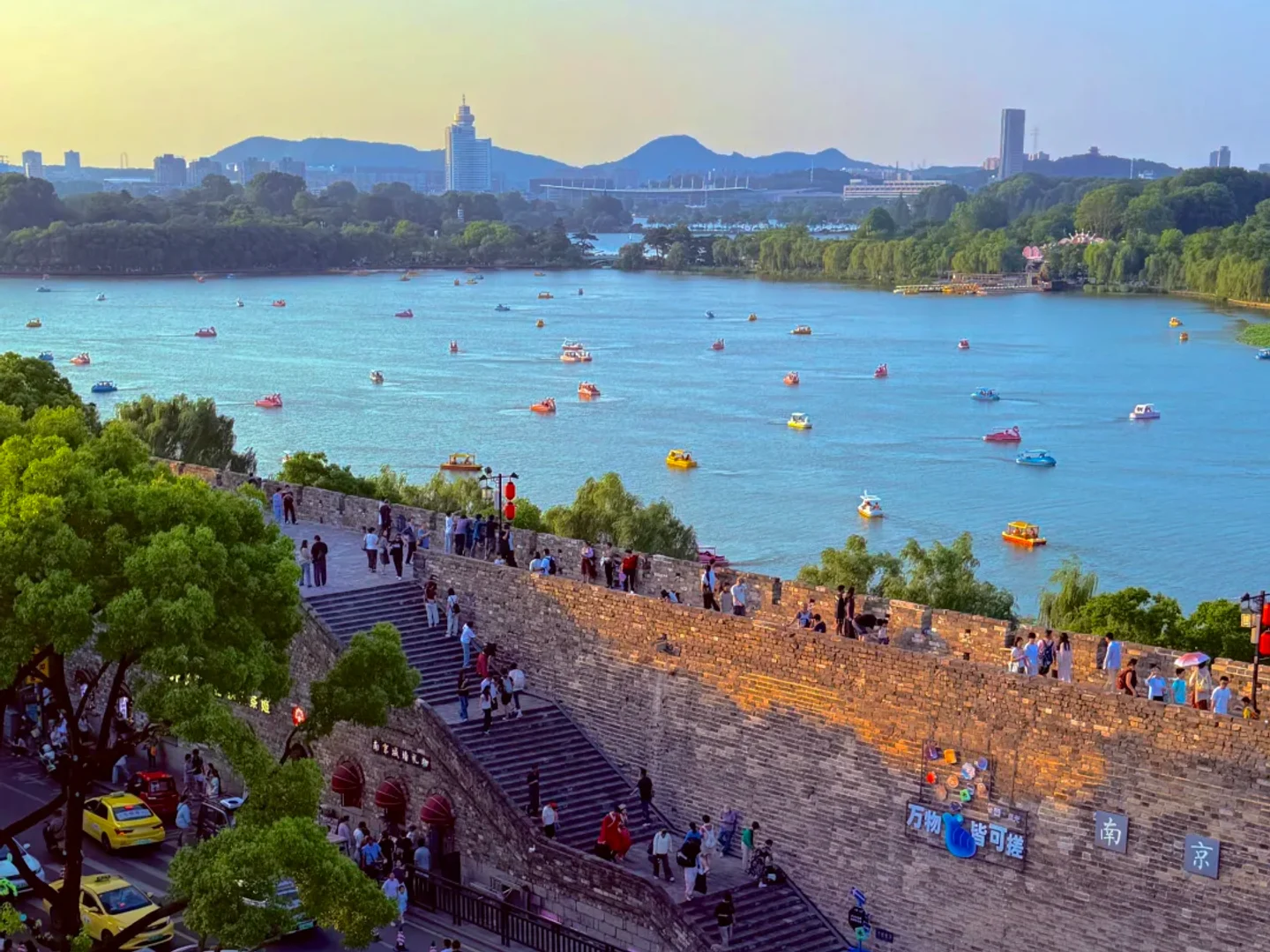
The Ming wall above Xuanwu Lake shows why the northern sights belong in one route.
## Is Nanjing worth visiting?
Yes—especially for travelers who want history without giving up a functioning modern city. Nanjing combines imperial remains, twentieth-century architecture, major museums, lake walks and mountain forest inside the metro network. It feels less like a single preserved district than layers of Chinese history sharing the same streets.
The city is not at its best as a frantic day trip from Shanghai. A one-day visit can cover one cluster, but it misses the contrast between the wall and lake, the shaded paths of Zhongshan Mountain, and the slower residential streets around Yihe Road.
## How many days do you need?
| Time | A realistic plan | Leave out |
|---|---|---|
| One day | Xuanwu Lake, Ming wall and one central evening | Zhongshan Mountain and distant attractions |
| Two days | Northern cluster plus one Zhongshan Mountain day | Niushou Mountain and a long museum list |
| Three days | Add museums, Yihe Road and the south-city lanes | Do not force every memorial and temple |
On a weekend or public holiday, start the most reservation-sensitive stop first. Keep one indoor option for heavy rain or summer heat, but do not assume every museum opens on Monday.
## Plan Nanjing by area
### Xuanwu Lake, Jiming Temple and the Ming wall
This is the most efficient introduction. Begin around **Xuanwu Lake**, then move toward the **Jiming Temple** area and climb the accessible section of the **Ming city wall** for the lake-and-skyline view. The precise wall entrance matters more than the attraction name: check where you plan to enter and exit before following a navigation route.
The lake is free and useful early or near sunset. Jiming Temple can become very busy during blossom season and holidays. If the queue is the entire experience, keep walking toward the wall rather than losing the morning.
### Zhongshan Mountain: keep the day together
Zhongshan Mountain is not one stop. It contains the **Sun Yat-sen Mausoleum**, **Ming Xiaoling**, the **Music Stage**, **Linggu** and long shaded roads between them. Pick two or three priorities instead of collecting every ticketed gate.
The Sun Yat-sen Mausoleum currently uses real-name reservations for free entry. Rules and release times can change, so use the official Zhongshan Scenic Area channel rather than an old screenshot. Ming Xiaoling and other sites use separate tickets. Summer shade helps, but distances still add up; wear shoes for a full walking day.
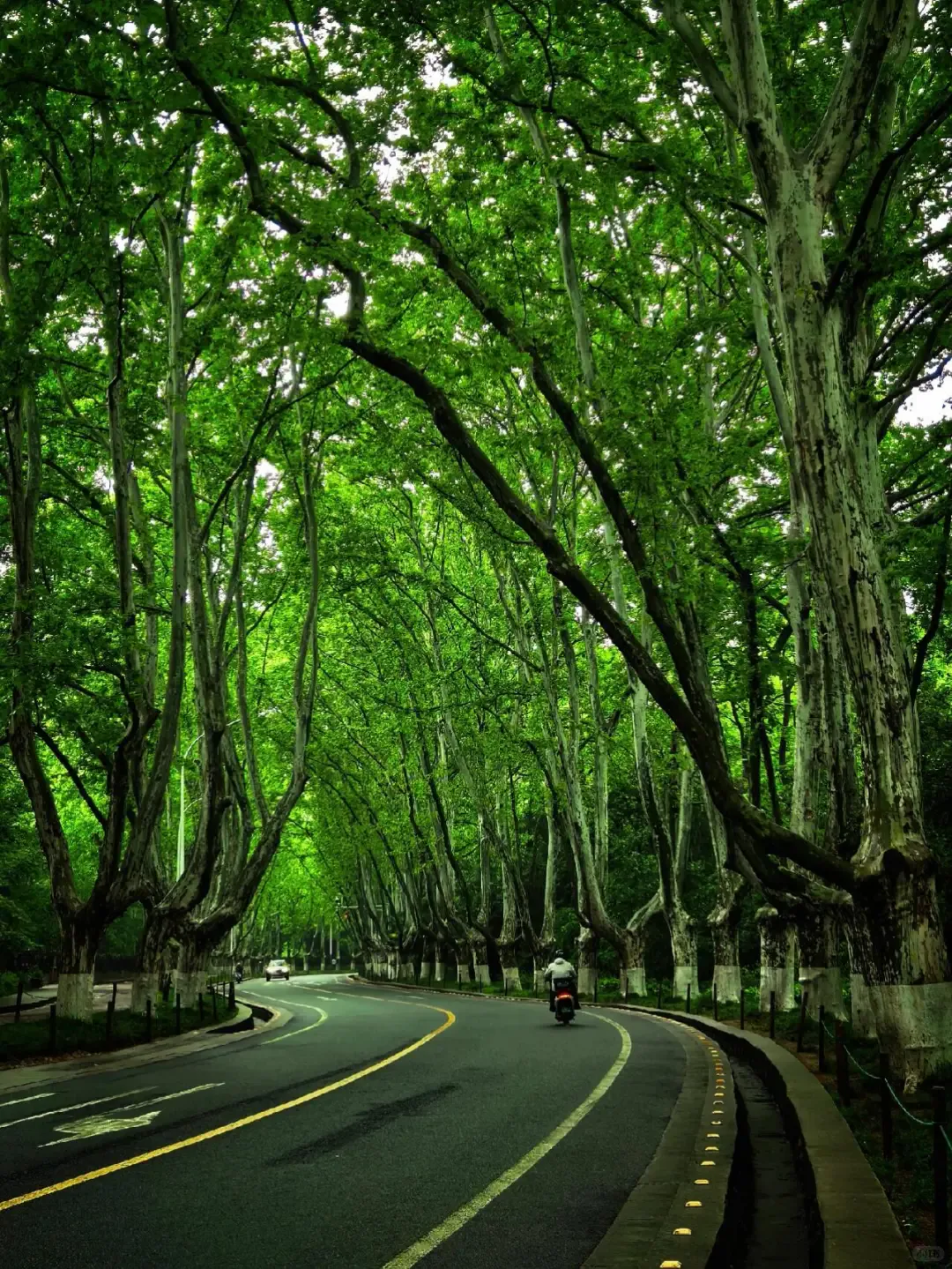
The plane-tree roads are part of the Zhongshan Mountain day, not a separate cross-city stop.
### Xinjiekou, Daxinggong and the museum center
**Xinjiekou** is the practical transport and hotel base. **Daxinggong** sits closer to the Presidential Palace, libraries and several central cultural stops. This cluster works well in rain because indoor visits can be linked with short street walks.
Nanjing Museum is farther east toward Minggugong and deserves its own time. Confirm its current reservation and closure rules before committing the day. A museum morning followed by a second museum afternoon usually produces fatigue, not insight; choose one major institution and leave room for the neighborhood.
### Yihe Road and the republican-era streets
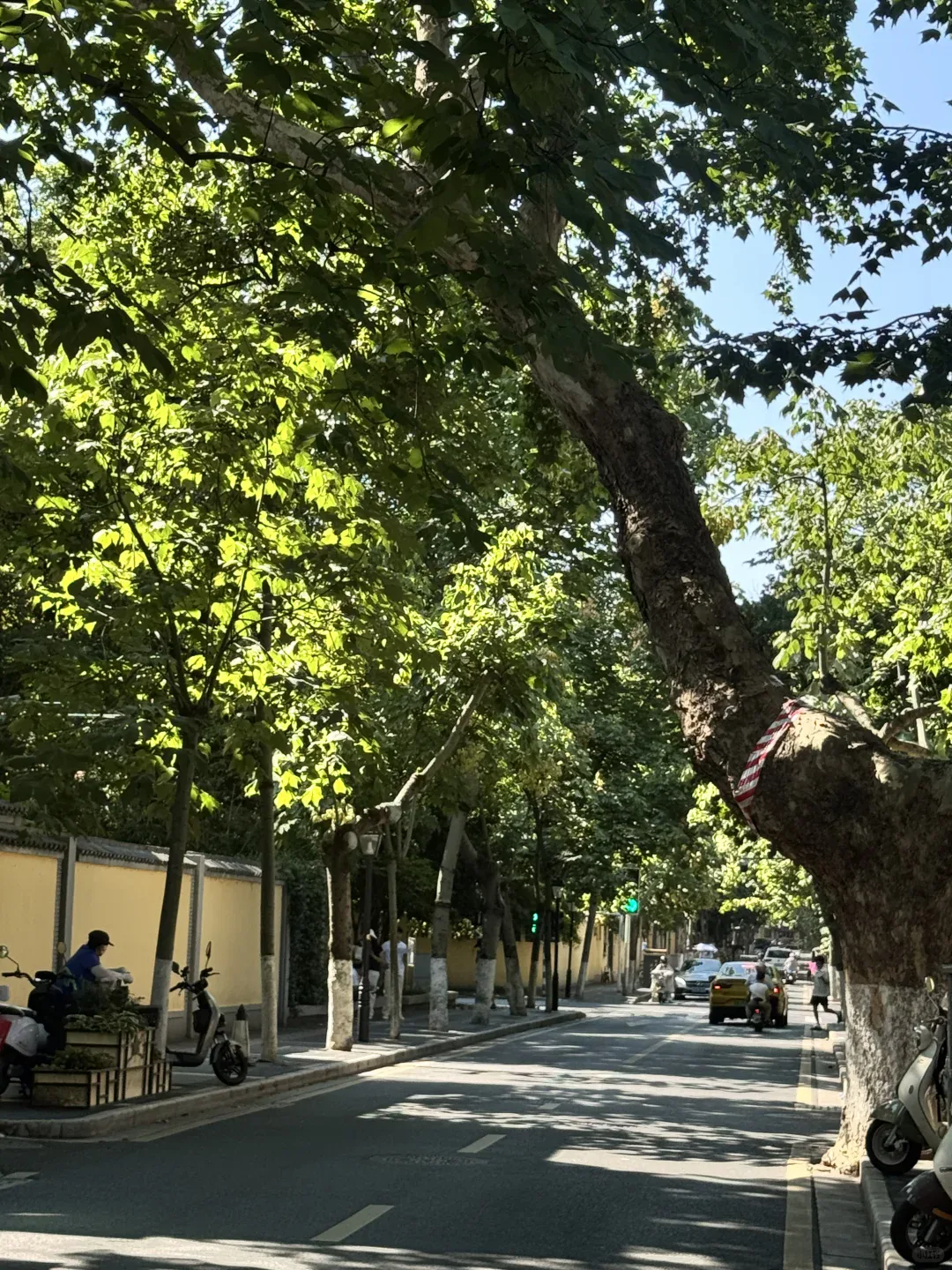
Yihe Road is better as a walk than as a single pin. The appeal is the canopy, brick walls and former residences spread across quiet streets. Go in daylight, keep your voice down around homes, and avoid blocking entrances for photographs.
Pair it with a northern or central day, not with a rushed trip to Niushou Mountain. Cafes can provide a break, but the neighborhood is not primarily a shopping street.
Yihe Road works as a quiet architectural walk between larger historical stops.
### Laomendong and the Qinhuai area
**Laomendong** is the better starting point for old lanes, city-wall fragments and a less compressed evening walk. **Confucius Temple and the Qinhuai River** are brighter and busier after dark. They are close enough to combine, but they offer different atmospheres.
Eat before the busiest evening hour or move one street away from the most photographed lanes. The famous snack list is useful for ideas, not a requirement to queue for every item.
## A two-day Nanjing route without crossing the city
### Day 1: lake, wall and the historic center
Start at **Xuanwu Lake**. Continue to the **Jiming Temple** area, then walk a section of the **Ming city wall** while visibility is good. After a rest, move south toward **Daxinggong** or **Xinjiekou** for dinner. If you still want an evening scene, choose either Laomendong or the Qinhuai riverfront—not both at a sprint.
This order keeps the longest outdoor walk in the cooler part of the day. In rain, reverse the middle: use a central museum first and move to the wall when the weather clears.
### Day 2: Zhongshan Mountain
Enter the scenic area early and follow the reservation time for the **Sun Yat-sen Mausoleum** if you have one. Add **Ming Xiaoling** for imperial history and forest paths, or choose **Linggu** for a quieter eastern finish. The Music Stage is a small optional stop, not a reason to crisscross the whole mountain.
Leave the scenic area before making dinner plans. The transfer back to the center, walking fatigue and queues can turn a tightly booked evening into stress.
## What about Niushou Mountain?
Niushou Mountain is a visually dramatic modern Buddhist complex south of central Nanjing, but it is not a quick extension to a Zhongshan day. Consider it on a third day, especially if architecture and large interior spaces are a priority.
Skip it on a two-day first visit if doing so would remove Xuanwu Lake, the Ming wall or Zhongshan Mountain. The transfer and time inside are the real cost—not only the ticket.
## Where to stay in Nanjing
| Area | Best for | Trade-off |
|---|---|---|
| Xinjiekou | First visits, metro interchanges and late food | Busy and less atmospheric on main roads |
| Daxinggong | Museums, central history and short rides | Fewer quiet lake walks outside the door |
| Xuanwumen | Xuanwu Lake, calmer mornings and north-city access | Extra transfer for southern evenings |
| Confucius Temple / Laomendong | Night atmosphere and food | Crowds, noise and slower cross-city starts |
| Nanjing South Railway Station | A very early high-speed train | Poor base for most sightseeing |
For a first visit, proximity to a useful metro station matters more than the district label. Check the actual walk from the station exit and whether luggage must cross a pedestrian zone.
## Airport and railway-station decisions
**Nanjing Lukou International Airport** is far south of the center. Metro, airport coaches, taxi and ride-hailing are available, but late arrivals should verify current final departures rather than relying on a daytime route. Save the Chinese hotel name before landing.
Nanjing has multiple railway stations. **Nanjing South** handles many high-speed trains and connects well to the metro, but it is not near the classic sights. **Nanjing Railway Station** sits beside Xuanwu Lake and can be convenient for the northern center. Confirm the full station name printed on the ticket before leaving.
## What to eat
Start with duck—salted duck is the local reference point, while roast duck is a different preparation. Duck-blood vermicelli soup is common, but texture and broth vary widely, so choose a busy everyday shop rather than the first tourist-corridor counter.
Other useful searches include soup dumplings, beef potstickers, sesame pancakes, osmanthus sweets and Nanjing-style noodles. At Laomendong or Confucius Temple, compare menus on side streets before committing to the longest queue.
## Weather and timing
Nanjing summers are hot and humid, and the mountain still requires substantial walking. Start early, carry water and keep the middle of the day flexible. Spring blossom weekends and autumn foliage periods can make scenic roads far busier than an ordinary weekday.
Winter is quieter but can feel damp and cold. The wall and lake are exposed to wind, while museums and south-city lanes provide useful alternatives. Visibility should decide when you climb the wall—not a rigid hour copied from a post.
## Mistakes that waste the most time
- Treating Zhongshan Mountain as one quick attraction rather than a full area.
- Crossing from Niushou Mountain to Zhongshan Mountain in the same sightseeing day.
- Assuming a museum or memorial needs no reservation because entry is free.
- Booking beside Nanjing South for several days without checking the commute.
- Following a route to the wrong city-wall gate.
- Spending an evening in queues at Confucius Temple without exploring the adjacent streets.
- Building the trip around blossom or foliage photos from a different week.
## Continue planning
- [China city guides](/en/cities/)
- [Shanghai travel guide](/en/shanghai/)
- [Suzhou travel guide](/en/suzhou/)
- [China train booking guide](/en/transport/china-train-tickets-foreigners/)
- [China eSIM guide](/en/esim/)
## Official sources
- [Nanjing municipal government — scenic spots](https://english.nanjing.gov.cn/ThisisNanjing/WelcometoNanjing/Scenicspot/)
- [Nanjing municipal government — parks and Xuanwu Lake](https://english.nanjing.gov.cn/IWantto/Travel/PlacestoGo/Parks/202405/t20240511_4663669.html)
- [Zhongshan Scenic Area — tickets and Sun Yat-sen Mausoleum reservation guidance](https://zschina.nanjing.gov.cn/fjms/fwzn/mpxx/)