Suzhou is what many travelers hope "old China" will feel like: white walls, black-tile roofs, canals, stone bridges, and gardens designed to make a small space feel endless. It is also one of the easiest mistakes to over-pack. The best Suzhou day is not a race. It is one garden, one museum or temple, and one canal walk done slowly.
From Shanghai, Suzhou is close enough to be casual. The challenge is not distance. The challenge is choosing well.
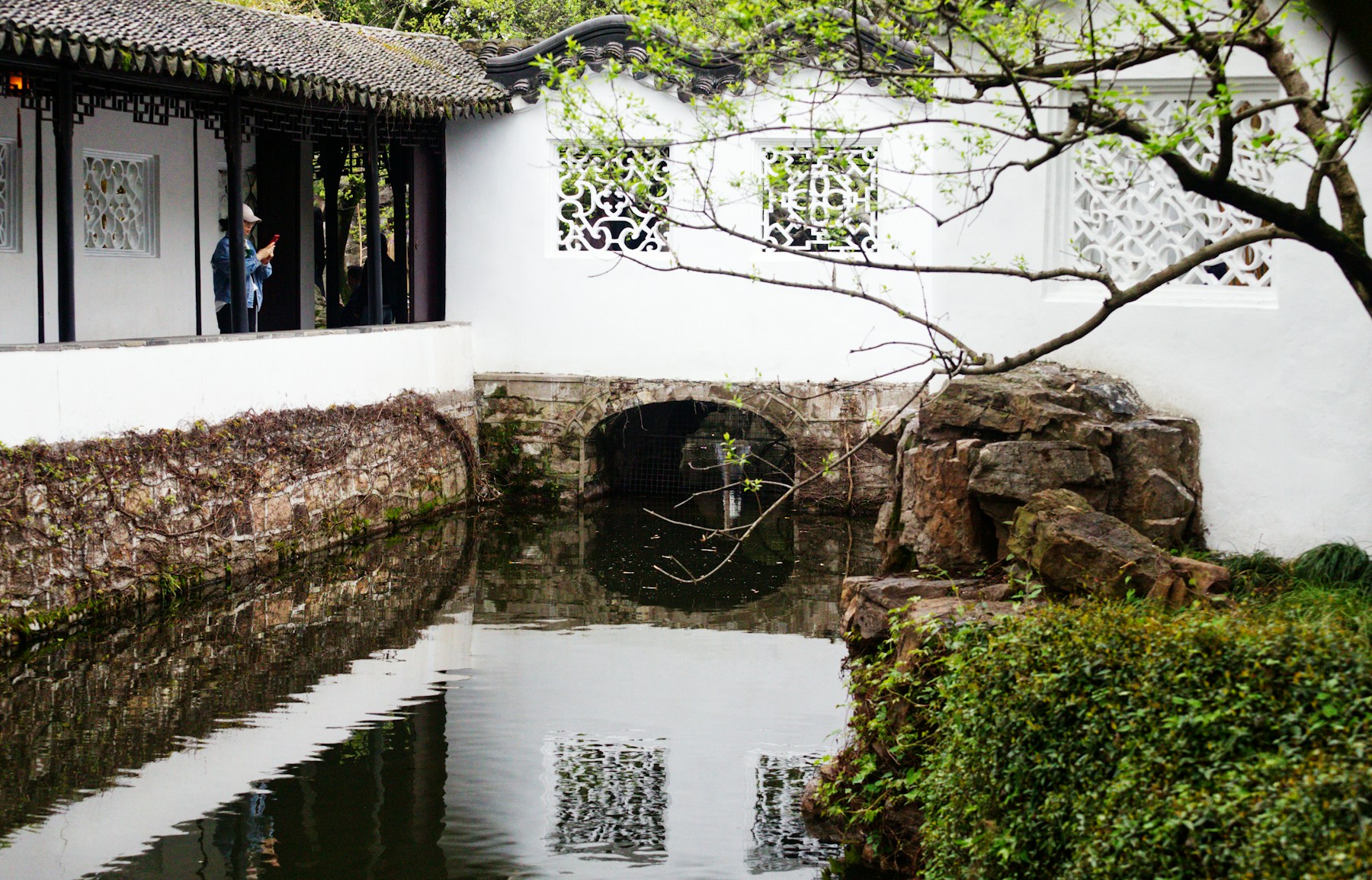
01 Gardens Suzhou rewards slow looking: water, walls, windows, and pauses, not a race through every ticketed garden.
## How many days do you need in Suzhou?
One day is enough for a strong first taste: **one classical garden, Suzhou Museum, Pingjiang Road, and Shantang Street at night**. One night lets you add Tiger Hill or a water town without turning the trip into a checklist.
If you are traveling from Shanghai, use **Shanghai Hongqiao to Suzhou Railway Station** or **Suzhou North** depending on train availability. Suzhou Railway Station is usually more convenient for the old city. Suzhou North is farther out.
That station choice matters. **Suzhou North** looks fine on a ticket screen but adds extra transfer time if your day is built around Humble Administrator's Garden, Suzhou Museum, Pingjiang Road, and Shantang Street.
## Choose one classical garden
Suzhou has several UNESCO-listed classical gardens. The first-timer mistake is buying tickets to too many. The design language repeats: ponds, rocks, windows, corridors, borrowed views. Visit one or two properly instead.
| Garden | Best for | Local-style warning |
|---|---|---|
| **Humble Administrator's Garden** | The classic first garden, large and water-focused | Famous means crowded. Go early or late. |
| **Lingering Garden** | Architecture, corridors, rock compositions | A better choice if you want a quieter mood. |
| **Lion Grove Garden** | Rock maze and playful paths | Fun, but can be noisy with groups. |
| **Master of the Nets Garden** | Small, refined, good for detail | Best if you already like gardens. |
| **Canglang Pavilion** | Older, more understated | Less flashy, more atmospheric. |
If you only pick one, choose Humble Administrator's Garden for the canonical version or Lingering Garden for a calmer one.
## Humble Administrator's Garden: go early or late
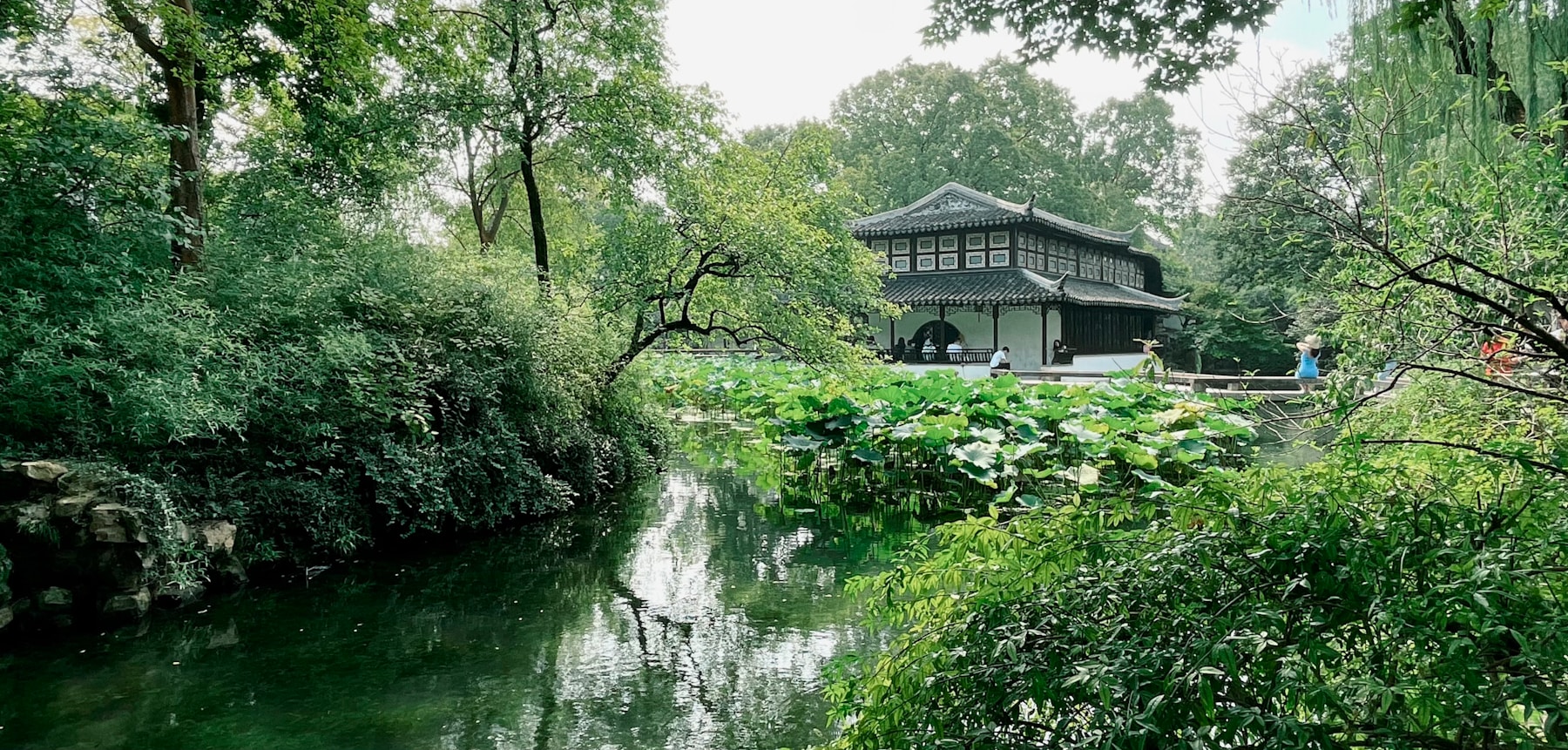
02 Water The garden views work best when you give them time, especially early or late.
Humble Administrator's Garden is the headline, and it earns that status. The problem is that everyone else knows it too. On holidays, the prettiest bridges and pavilions become photo bottlenecks.
The local move is to enter near opening or in the last part of the day, then slow down. Look through the framed windows, watch how the corridors turn the view, and do not treat it like a park to be crossed. Suzhou gardens are built for pauses.
## Suzhou Museum: I.M. Pei's modern Jiangnan
Suzhou Museum is one of the easiest museum recommendations in China because the building itself is the attraction. Designed by **I.M. Pei**, it translates Suzhou's white walls, dark roofs, and garden geometry into a modern form.
It is close to Humble Administrator's Garden and Lion Grove Garden, which makes it easy to combine. Check the current reservation system before you go, and remember that many Chinese museums close on **Mondays**.
## Pingjiang Road: walk the side lanes
Pingjiang Road is about **1.6 km** of canal-side old town. It is popular, commercial, and still worth doing. The trick is to stop treating the main street as the whole attraction. Step into side lanes like small residential alleys, watch the boats, and use cafes or teahouses as pauses.
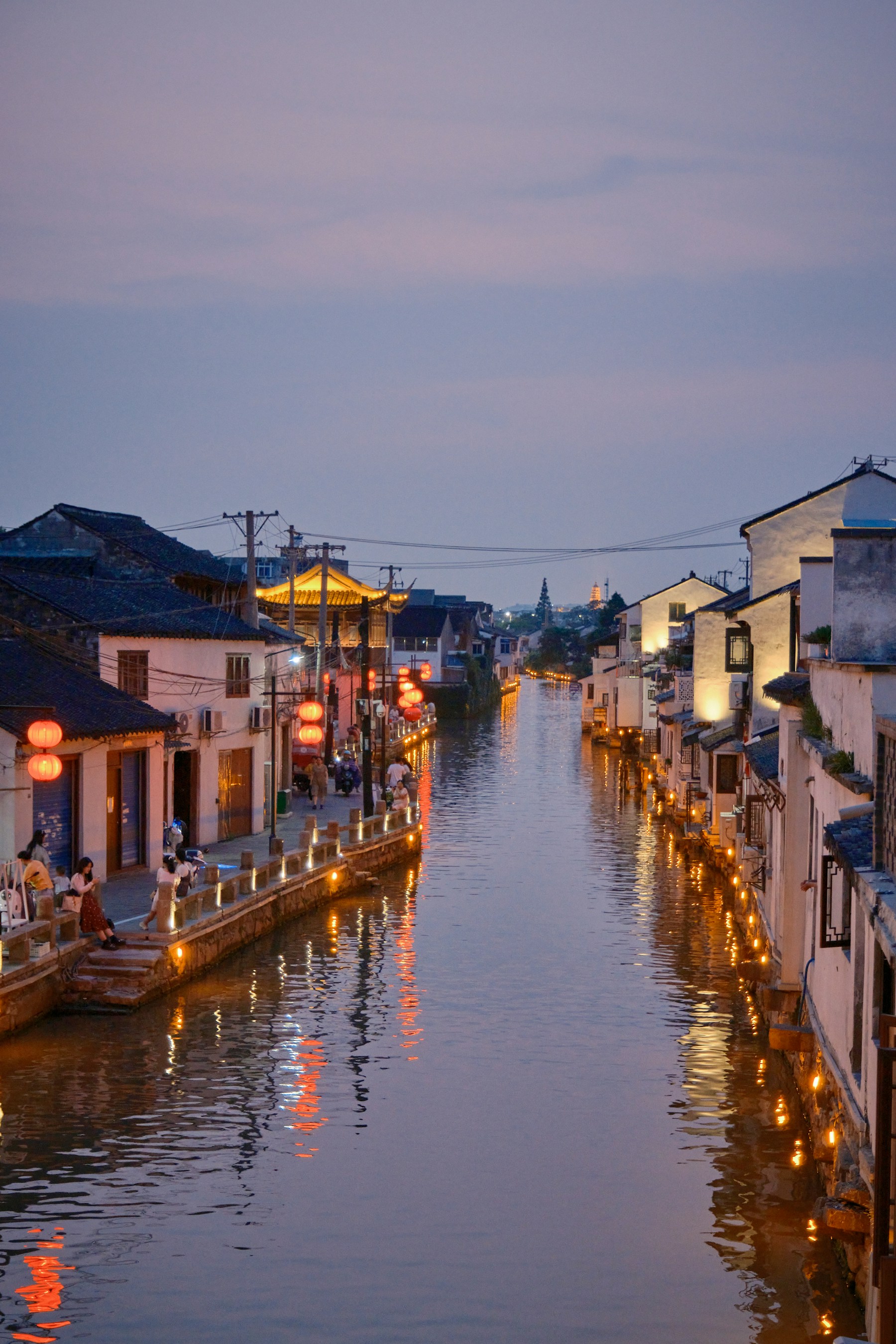
Late afternoon into evening is the best window. Daytime can feel like a snack street. Evening gives you lanterns, water reflections, and the slower Suzhou mood people came for.
If the main street feels like a queue, leave it for lanes such as Dingxiang Lane or Daru Lane. Local travelers often say the "real" Pingjiang Road is not the shopfronts everyone photographs, but the quieter homes, tiny bookstores, teahouses, and canal corners just beside it.
03 Canals Step off the main flow and Suzhou becomes softer: lanes, water, and small pauses.
## Shantang Street is better at night
Shantang Street is more dramatic after dark, when the lanterns turn the canal into the "small bridges, flowing water, homes" image that Chinese travelers associate with Jiangnan. It is busier than Pingjiang Road, but the night view is strong enough to justify the crowd.
If you only have one evening, do Pingjiang Road before dinner and Shantang Street after dinner. That sequence feels more natural than the reverse.
## Tiger Hill and Hanshan Temple
Tiger Hill is the better extra if you have a full day or overnight stay. Its leaning pagoda gives Suzhou a more vertical landmark after all the garden courtyards. Hanshan Temple is famous because of the Tang poem "A Night Mooring by Maple Bridge," but the temple itself is not large. Go if the poem matters to you, not because every itinerary lists it.
For a calmer temple stop, **Xiyuan Temple** is often preferred by repeat Chinese visitors: quieter courtyards, cats, and simple vegetarian noodles. Go before early afternoon if you care about the noodles; small temple food counters can sell out or close earlier than expected.
## Water towns: Zhouzhuang and Tongli need another slot
Zhouzhuang and Tongli are classic water towns, but they are not inside the old-city walking loop. Local travelers often warn against combining "Suzhou city plus water town" in one day from Shanghai. You spend too much time transferring and too little time looking.
If you want a water town, either stay overnight in Suzhou or make the water town the main event. Do not add it as a late-afternoon afterthought.
## One-day Suzhou route from Shanghai
| Time | Plan |
|---|---|
| 08:00-09:00 | Train from Shanghai to Suzhou Railway Station |
| 09:30-11:30 | Humble Administrator's Garden or Lingering Garden |
| 11:30-13:00 | Suzhou Museum area and lunch |
| 14:00-17:00 | Pingjiang Road, side lanes, canal walk |
| 18:00-20:00 | Shantang Street night view, then train back |
This is already enough. Adding Tiger Hill makes it rushed; adding a water town makes it brittle.
## Local traps to skip
- **Garden hopping**: more tickets, weaker memories.
- **Choosing Suzhou North by accident**: it is often less convenient for the old city.
- **Eating only on the main tourist streets**: step one or two lanes away.
- **Water town plus old city in one day**: possible on paper, tiring in real life.
- **Forgetting reservations**: museum and peak garden slots can be tight on holidays.
- **Buying from ticket touts outside gardens or on Pingjiang Road**: official QR booking is usually safer than a "fast entry" promise.
- **Overpaying for Pingtan seats online without choosing seats**: if you care where you sit, check the venue rules before buying.
## Internet, maps, and payment
Suzhou is close to Shanghai, but your phone setup still matters. Use an overseas-routed [China eSIM](/en/esim/) so maps and translation work, and set up [Alipay](/en/pay/alipay-for-foreigners/) before arrival. Trains, metro rides, taxis, museum bookings, and small shops are all easier when mobile payment is ready.
## Sources
- [Suzhou travel guide — China Discovery](https://www.chinadiscovery.com/jiangsu/suzhou.html)
- [Pingjiang Road, Suzhou — TravelChinaGuide](https://www.travelchinaguide.com/attraction/jiangsu/suzhou/pingjiang-road.htm)
- [Shanghai, Suzhou and Hangzhou itinerary — Asia Odyssey Travel](https://www.asiaodysseytravel.com/travel-guide/plan-shanghai-suzhou-hangzhou-tour.html)