Interactive trip-prep checklist
Pack for China without packing your whole house
Build, save and share a China packing list for your dates and route. Covers passports, eSIM, payments, medicine, power banks, trains and seasonal clothing.
A China packing list begins with dependencies. Your map needs data. Mobile payment needs data and a working card. A high-speed train ticket needs the passport used for booking. The hotel needs that passport again at check-in.
The builder above turns those dependencies into a list for your trip. Choose the length, season, transport and accommodation. Check items as you pack; the progress stays in this browser. You can send the current version to yourself or a travel partner without creating an account.
What makes a China packing list different?
A generic vacation list remembers socks and shampoo. China adds a few tasks that are difficult to fix when you are offline at an airport pickup zone:
| China-specific task | Finish before departure |
|---|---|
| Mobile data | Install an eSIM or activate roaming; keep the home SIM available for verification SMS |
| Mobile payment | Verify Alipay or WeChat Pay, link an international card and bring a second card |
| Passport bookings | Use one consistent passport for flights, hotels, trains and timed attractions |
| Chinese addresses | Save the first hotel and other critical destinations in Chinese |
| Customs | Check medicine, food, supplements, cash and gifts before closing the suitcase |
| Domestic flights | Check the power bank’s Wh, CCC mark and recall status |
These are setup jobs, not extra objects. Finish them on home Wi-Fi, where your bank, email and spare devices are still easy to reach.
Documents: keep one identity chain
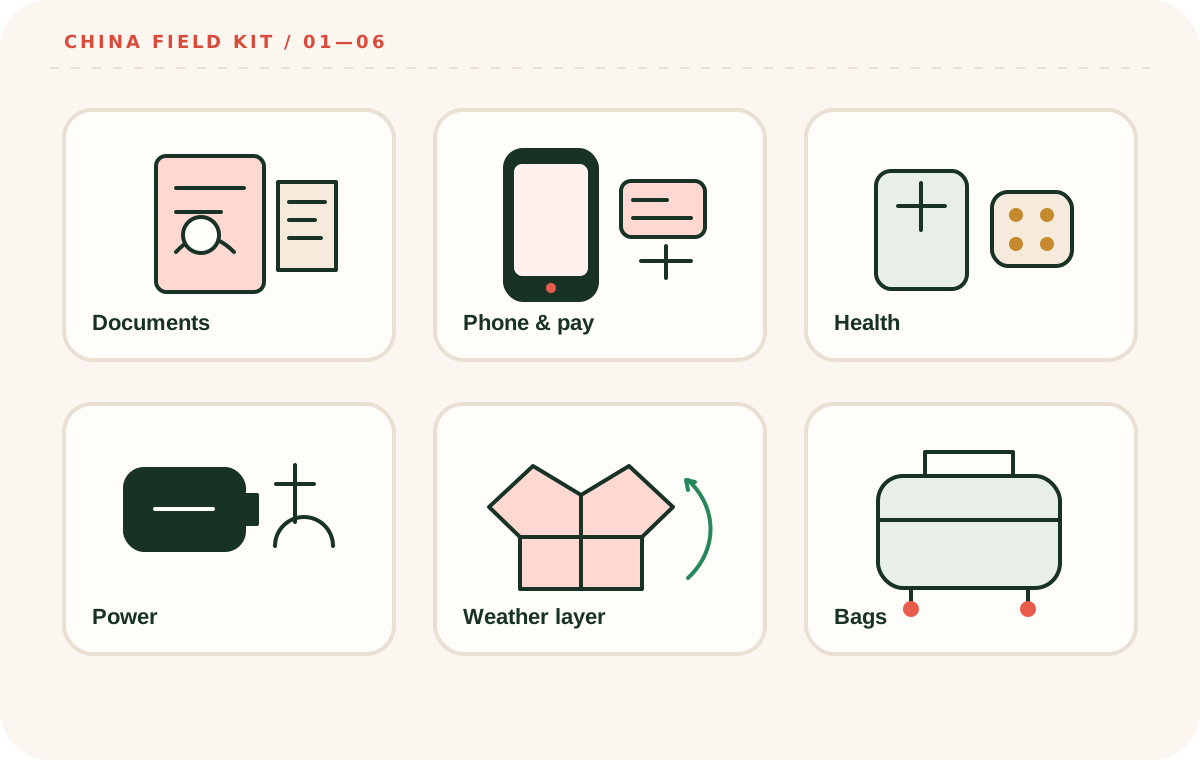
Use the same valid passport details across every reservation. Carry the original passport in a secure part of your day bag; a photograph is a backup for finding information, not a substitute at a hotel, railway gate or attraction that requires the original.
Keep these available offline:
- visa or confirmed visa-free entry route;
- official arrival-card confirmation;
- inbound and onward transport;
- first hotel name, street address and telephone number in Chinese;
- hotel and attraction booking references;
- travel-insurance assistance number;
- one emergency contact and the relevant embassy or consulate page.
China’s National Immigration Administration allows foreign travelers to submit arrival information online. Use the official NIA service rather than a paid imitation site. Our arrival-card guide explains when to complete it and what to save.
If you stay in a private home rather than a hotel, plan accommodation registration with the host. Hotels normally handle registration during check-in; a private address follows the local public-security registration process.
Phone, mobile data and payments
For most short trips, keep your home SIM active and add a second line for data. Disable expensive data roaming on the home line if the eSIM carries traffic, but do not switch the line off when your bank sends verification codes there.
Before the flight:
- Install and label the travel eSIM.
- Receive a test SMS on the home number.
- Open the map, Didi and translation app.
- Save the hotel in Chinese.
- Verify one payment wallet and its linked card.
- Carry another physical card and some RMB cash.
The travel-without-a-Chinese-number guide covers the full setup. A Chinese number is useful for local delivery and some mini-programs, but it is not a universal requirement for a short visitor trip.
Medicine, toiletries and food
Put essential medicine in cabin baggage, subject to airline liquid rules. Leave it in the pharmacy box or labelled bottle and carry the prescription or a doctor’s letter when the medicine is important, injectable, controlled or difficult to identify.
Bring travel-size toiletries for the first day even when you plan to buy full-size products after arrival. Pocket tissues and hand sanitizer are small and genuinely useful. Sunscreen and familiar personal-care products can be easier to pack than to identify in a local shop immediately after arrival.
Do not use a packing list to answer a customs question. Fresh fruit and vegetables, meat, eggs, many dairy products, seeds and other animal or plant products can be prohibited or restricted. Run uncertain items through the China customs item checker and follow China Customs’ current instructions.
Chargers, plugs and power banks
China uses 220V electricity. Most modern phone and laptop chargers accept 100–240V; read the input line on the charger. A compact universal adapter is more reliable than assuming every hotel socket will accept your plug shape.
Power banks:
- stay in carry-on baggage;
- need a readable Wh rating or the values required to calculate it;
- normally stay at or below 100Wh;
- require airline approval above 100Wh and up to 160Wh;
- need a clear CCC mark and a non-recalled model for mainland domestic flights.
Use the China Power Bank / 3C Checker for each flight sector. An international arrival and a domestic connection are not the same security decision.
Clothes: plan for walking and laundry
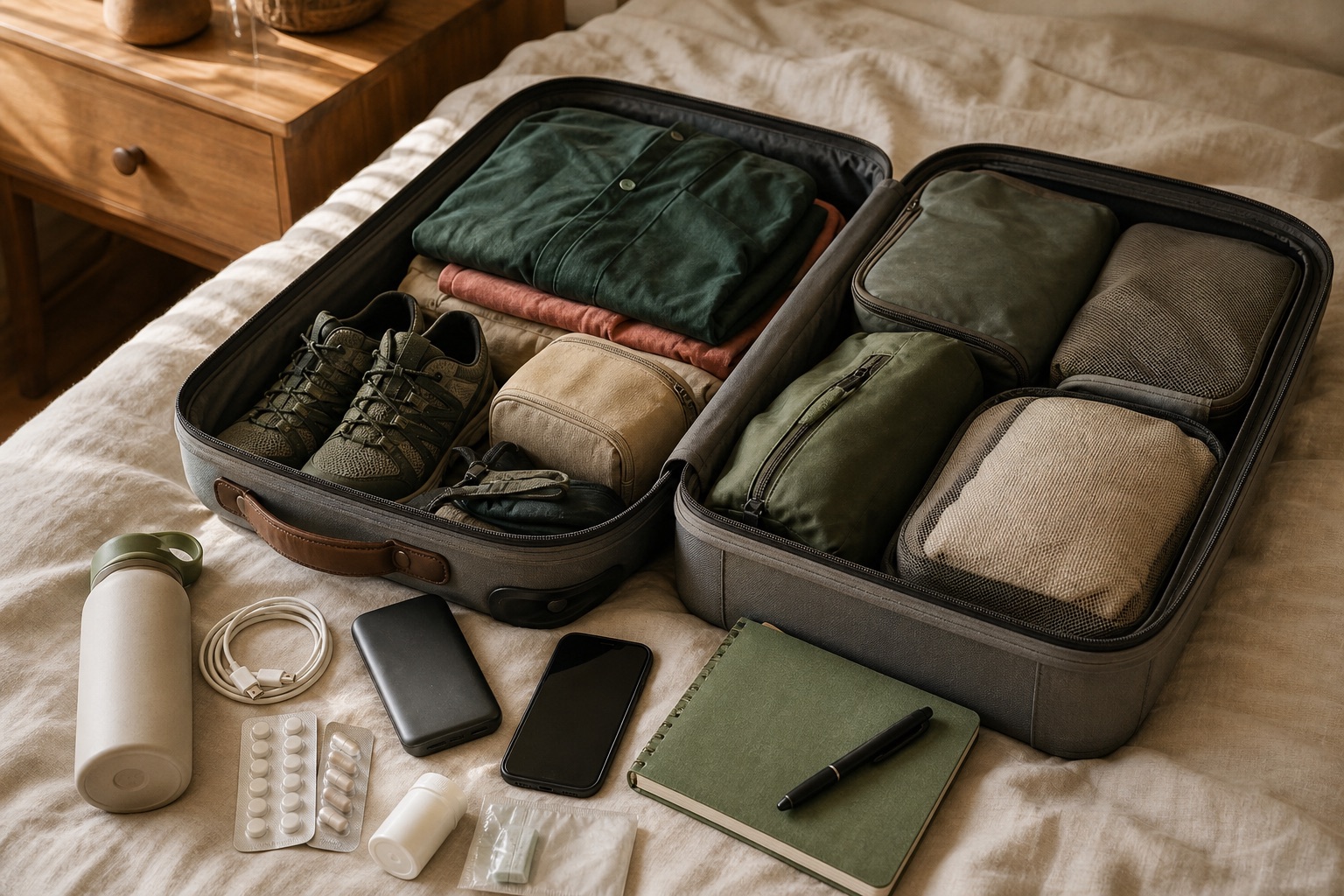
China trips often involve long metro corridors, large railway stations, attraction queues and old paving. Bring walking shoes that are already broken in. One reliable pair is better than three hopeful pairs.
For a week, a practical starting point is:
- 6–8 sets of underwear and socks;
- 4–5 tops that work together;
- 2–3 bottoms;
- one light indoor or evening layer;
- sleepwear;
- one compact laundry bag;
- weather protection for the actual city and month.
Hot and humid travel needs breathable, quick-dry clothing and a light layer for strong air conditioning. A northern winter needs real insulation, gloves, lip balm and moisturizer. Rainy months need a compact umbrella and shoes that recover quickly. For trips longer than ten days, plan laundry instead of multiplying every item.
Read the month-by-month China weather guide before choosing the final layer. Beijing, Shanghai, Harbin and Yunnan cannot share one seasonal packing sentence.
What can stay at home
- A large stack of cash. Keep a modest backup, not the trip budget in one envelope.
- Several new boxed electronics. They can look commercial at customs.
- A large bottle of every toiletry. Buy ordinary replacements after arrival.
- Unlabelled loose medicine.
- Fresh produce, meat snacks or seeds you have not checked.
- A damaged or unreadable power bank.
- Formal shoes for a walking-heavy itinerary unless an event requires them.
- Printed copies of everything. Keep a small critical paper set and an offline digital folder.
The final 24-hour check
Tonight: charge every device, finish the arrival card, download bookings, test the eSIM instructions and check the first transport route.
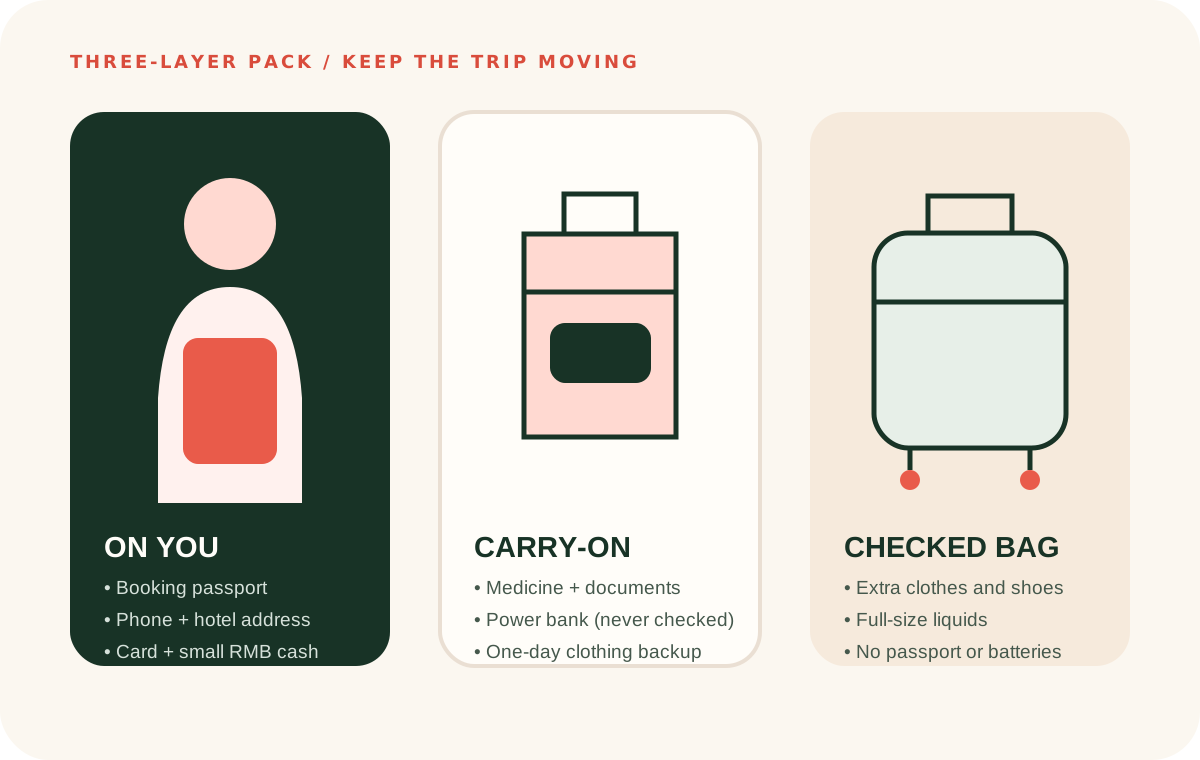
Before leaving home: move the passport, phone, cards, medicine and power bank into cabin baggage. Check that the power bank did not end up in the suitcase during repacking.
At the airport: confirm the home SIM can still receive messages, then put the phone into the configuration you will use after landing. Do not experiment with SIM settings for the first time after immigration.
The builder’s “To pack” filter is designed for this last pass. Copy the remaining items into a message to yourself or save a progress card to the phone.
How sharing works
The tool stores progress in this browser. “Share my list” creates a URL containing your trip settings, checked items and custom items. Anyone with that link can see the list and continue checking it on their own device. No account or email address is required.
“Copy as text” is better for Notes, email and messaging apps. “Save progress card” creates an image with the current completion count and the next unpacked items. “Print / PDF” uses the browser’s print dialog and hides the article around the checklist.
The shared link contains the list state, so treat it like a normal planning note: do not add passport numbers, medical details or private addresses as custom items.
Related preparation guides
- First-time China travel checklist
- What can I bring to China?
- China Power Bank / 3C Checker
- China travel without a Chinese phone number
- Alipay for foreigners
- China train tickets for foreigners