2026 TRAVEL CALENDAR
Best Time to Visit China in 2026, Route by Route
Late April, May 6–31, mid-September and Oct 9–early November are the easiest windows for a first China trip. Compare all 12 months and 2026 holidays.
There is no single best month for a country this large. Late April, May 6–31, mid-September and October 9 to early November suit the classic Beijing–Xi’an–Shanghai route, but a July trip can work beautifully if you trade hot eastern cities for Qinghai, Inner Mongolia or the Yunnan highlands. January is punishing in Beijing and exactly right for Harbin’s winter spectacle.
Plan in this order: choose the month that fits your route, then check whether it collides with a national holiday. Use the weather forecast to fine-tune the trip later.
Choose the trip first, then the month
If your dates are flexible, match the calendar to the experience you care about most.
| Your trip | Strongest window | What you are trading off |
|---|---|---|
| First-time Beijing–Xi’an–Shanghai route | Late Apr; May 6–31; mid-Sep; Oct 9–early Nov | Spring can be changeable; autumn dates near holidays book quickly |
| Cities with fewer crowds | Nov–early Dec; Mar | Shorter days, colder north, less predictable spring weather |
| Yunnan highlands | Mar–May; Sep–Nov | Summer is greener but wetter; altitude changes the temperature quickly |
| Qinghai, grasslands and high-altitude scenery | Jun–Aug | Popular summer routes still need early booking and altitude planning |
| Harbin and northeast winter | Late Dec–Jan | Severe cold and holiday-weekend demand |
| Hainan beach break | Nov–Mar | Winter is popular, so beachfront prices may not be low |
This route-first approach matters more than chasing a nationwide temperature average. Beijing, Kunming and Sanya can feel like three different countries on the same day.
The 2026 holiday dates that change a trip
China’s official holiday calendar marks office closures and the dates when domestic transport and major attractions will be under the most pressure. The official 2026 dates below come from the State Council schedule.
| Holiday | Official 2026 break | What a visitor should do |
|---|---|---|
| Spring Festival | Feb 15–23 | Already passed. In future years, check the newly published schedule rather than assuming the same week. |
| Qingming Festival | Apr 4–6 | Short regional spike; reserve popular day trips if your dates overlap. |
| Labor Day | May 1–5 | A major leisure-travel period. Avoid a multi-city move during the break if possible. |
| Dragon Boat Festival | Jun 19–21 | Shorter pressure window; trains on popular city pairs can still tighten. |
| Mid-Autumn Festival | Sep 25–27 | Relevant to late-September trips. Keep intercity travel outside the long weekend when possible. |
| National Day | Oct 1–7 | The biggest remaining 2026 warning. Move the trip to Oct 9 onward if you can. |
Hotels, stations and attractions continue to operate during these breaks, and the holiday atmosphere can be enjoyable. The downside is the combination of full trains, timed-entry tickets, crowded landmarks and expensive rooms. If you deliberately want the festival, stay in one city, secure transport first and build each day around reservations rather than improvising.
Month by month, at a glance
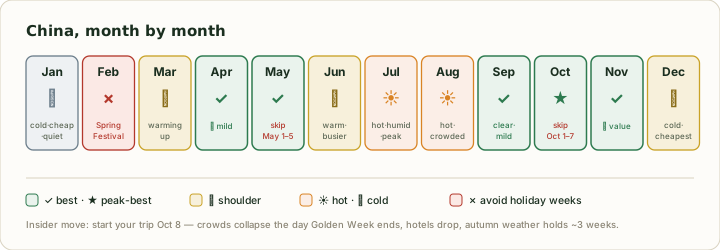
| Month | Where it works well | Main friction |
|---|---|---|
| January | Harbin, northeast snow, quieter Beijing, Yunnan | Deep cold in the north; winter beach demand in Hainan |
| February | Festival atmosphere, Yunnan, southern routes | Spring Festival dates change annually; closures and transport pressure around the break |
| March | Yunnan, southern flowers, city trips before peak season | Changeable weather; wind and occasional dust in the north |
| April | Beijing, Xi’an, Shanghai, Jiangnan water towns, hiking | Qingming long weekend; rain becomes more frequent in parts of the south |
| May | Most first-time routes, Great Wall, western Sichuan, Yunnan | Labor Day crowds; southern heat and humidity build later in the month |
| June | Qinghai, Inner Mongolia, highlands and early-summer nature | Rainy season expands across the south and Yangtze basin |
| July | Qinghai, Gansu, grasslands, high-altitude Yunnan | Heat, school holidays, heavy rain and disrupted mountain roads in some regions |
| August | High and northern routes; family summer travel | Peak heat and demand; July–August is the most active part of China’s typhoon season |
| September | Beijing, Xi’an, Shanghai, Chengdu, hiking | Mid-Autumn holiday Sep 25–27; tropical systems can still affect the southeast coast |
| October | Autumn cities, Great Wall, north and central China | National Day Oct 1–7; book Oct 9 onward for the calmer window |
| November | Beijing, Shanghai, Chengdu, south China, value trips | Northern foliage fades and evenings turn cold |
| December | Quieter cities, early snow trips, Yunnan and Hainan | Short daylight and real winter conditions in the north |
Spring: excellent, but not one continuous sweet spot
Spring moves north over several weeks. March can feel settled in Yunnan while Beijing is still windy and bare. By late April, the classic northern and eastern route is comfortable; in May, trees are green and outdoor days are long, but humidity and rain begin building in the south.
For a first visit, late April or May 6–31 is more useful advice than “go in spring.” It removes the April 4–6 Qingming break and May 1–5 Labor Day rush from an otherwise strong season. Pack one light rain layer and a warmer piece for evenings rather than betting on a fixed temperature.
Summer: change the map instead of cancelling the trip
June through August is difficult for a fast Beijing–Shanghai–Guilin circuit: long sightseeing days meet heat, humidity, school-holiday crowds and a moving monsoon rain belt. That does not make all of China a poor summer destination.
If you are flying from Europe, our separate summer 2026 demand and planning brief explains how the current visa-free window and stronger China–Europe flight schedule change the booking decision without changing the heat.
Shift the route toward Qinghai and Gansu, Inner Mongolia’s grasslands, the northeast, or higher parts of Yunnan and western Sichuan. High elevation can make the air cooler, though strong sun, cold evenings and altitude sickness become separate planning issues.
For southern and Yangtze routes, add one flexible half-day every three or four days. Do not cancel a whole month because a climate chart says “rainy season”: check the city-level forecast shortly before travel and keep an indoor alternative. On mountain routes, take heavy-rain warnings seriously because the practical risk may be road access rather than getting wet.
Autumn: the easiest season, with two calendar traps
September and October give many first-time routes their best combination of walking weather and clear views. In 2026, however, Mid-Autumn Festival runs September 25–27, followed quickly by National Day on October 1–7. That makes late September through the first week of October less convenient than the weather alone suggests.
The cleaner booking window begins after the National Day break. October 9 to early November is a sensible target for Beijing, Xi’an, Shanghai and many central-China routes. October 8 is the first day after the holiday, but some travelers are still returning home; treating it as a transfer day is safer than promising an instant nationwide calm. Travelers who cannot move the dates should switch to the one-city Golden Week plan rather than forcing the normal route.
Foliage timing varies with latitude, elevation and that year’s weather. Northern color comes earlier; southern hills can hold autumn later. If leaves are central to the trip, check the destination’s current-season reports rather than booking against a nationwide “peak date.”
Winter: lowest crowds in some cities, peak season in others
December through February can be excellent for travelers who value space more than warmth. Northern city sights are quieter on ordinary weekdays, and snow can transform the Great Wall. The trade-off is not cosmetic: exposed sites can be bitterly cold, daylight is shorter and wind may cut an outdoor day short.
Winter bargains depend on the destination. Harbin around its ice-and-snow season and Hainan’s warm coast are winter draws, so good rooms can be busy. Yunnan, Guangxi and the far south offer milder alternatives, but altitude and local geography still produce large day-to-night temperature swings.
If you want Spring Festival atmosphere, plan for it deliberately. The celebration is memorable, yet the official holiday and the broader family-travel period affect transport, opening hours and staffing. Wait for the State Council to publish the relevant year’s exact schedule before locking in a multi-city itinerary.
Rain, heat and typhoons: how to use the warning without overreacting
China’s summer rain does not begin everywhere at once. The monsoon rain belt generally advances from the south, while the rainy season in southwest China and the plum-rain period in the Yangtze basin develop in sequence. Coastal risk is different again: the China Meteorological Administration identifies July and August as the most active typhoon period.
Use that information in three layers:
- Months ahead: choose a route that fits the broad season and avoid a connection-heavy itinerary in a high-risk period.
- One week ahead: check official city forecasts and weather warnings; decide which outdoor day needs a backup.
- On the trip: move a museum or food day forward when heavy rain is expected, and do not force a mountain or coastal transfer through a warning.
Climate averages help choose a month. They cannot tell you whether it will rain at 3 p.m. on your Great Wall day.
About a week before departure, check the National Meteorological Center’s live forecast and warnings as well as notices from any mountain or coastal attraction on your route.
Best window by popular route
| Route or destination | Most comfortable choice | A good alternative |
|---|---|---|
| Beijing–Xi’an–Shanghai | Late Apr–May 31; mid-Sep; Oct 9–early Nov | November for lower crowds if you accept colder Beijing days |
| Shanghai–Suzhou–Hangzhou | Apr–May; Oct–Nov | March for blossoms and lighter demand, with variable rain |
| Chengdu–Chongqing | Mar–May; Oct–Nov | Winter for mild temperatures, though gray skies are common |
| Guilin and Yangshuo | Apr–May; Sep–Nov | Early summer for lush landscapes if rain flexibility is built in |
| Yunnan: Kunming–Dali–Lijiang | Mar–May; Sep–Nov | Summer for green scenery, with wetter days and road-risk checks |
| Qinghai, Gansu and grassland routes | Jun–Aug | September for fewer families, depending on elevation and route |
| Harbin and the northeast | Jan for winter; Jun–Aug for cool summer travel | Sep–Oct for crisp weather and autumn color |
| Hainan | Nov–Mar | Shoulder months for value, while monitoring heat and tropical weather |
When is China cheapest?
There is no nationwide “half-price month.” Air routes, trade fairs, school calendars and local festivals can override the season. Still, November, early December and ordinary March weekdays often offer a better balance of room availability and crowd levels than the headline spring and autumn peaks.
Check the actual route before choosing the cheapest flight. A low fare into Shanghai is not a bargain if it forces a National Day train journey or six expensive hotel nights. Build a rough total with the one-week China budget guide, then compare date combinations.
How early should you book?
- For National Day or Spring Festival: change dates if sightseeing is the priority. If the holiday itself is the reason to go, reserve international transport and cancellable accommodation early, then monitor domestic ticket release dates.
- For April–May and September–October: secure the international flight and well-located hotel once the route is fixed. Book timed-entry attractions and trains when their official sales windows open.
- For quieter winter or March dates: keep flexibility longer, but do not assume Harbin, Hainan or a major event weekend will be cheap.
- For any mountain or coastal route: favor cancellable bookings and leave one weather-flex day rather than filling every morning with a non-refundable transfer.
Before departure, use the China packing list to adjust clothing by region, not by the word “spring” or “summer.” If this is your first trip, the China travel checklist covers payments, mobile data, tickets and documents in the order you need them.
Frequently asked questions
What is the best month for a first trip to China?
For Beijing, Xi’an and Shanghai, May outside May 1–5, mid-September, or October after October 8 are the easiest choices. Late April and early November are good alternatives if you prefer lighter crowds and accept more variable temperatures.
Is July too hot for China?
It is often hot and humid for an eastern city circuit, but July can be a strong month for Qinghai, Gansu, Inner Mongolia, the northeast and high-altitude routes. Route choice matters more than the nationwide label “summer.”
Is October 8 really the best day to arrive after Golden Week?
October 8 is better than arriving during October 1–7, but some return traffic remains. For a calmer start, arrive on October 9 or use October 8 as an easy hotel-transfer day.
Can I visit during Chinese New Year?
Yes, if the celebration is part of the reason for the trip. Expect pressure on transport, changing opening hours and some family-run businesses to close. Stay in fewer places and confirm the official dates for the specific year.
Should I avoid all of southern China in typhoon season?
No. A seasonal risk is not a forecast for every city or every day. Keep coastal and island plans flexible in July and August, follow official warnings, and avoid tight non-refundable connections when a tropical system is approaching.
Sources
- State Council: official 2026 public holiday schedule
- Beijing government: 2026 public holidays in English
- China Meteorological Administration: the summer monsoon and main flood season
- China Meteorological Administration: July–August typhoon activity
- China Meteorological Administration: China Climate Bulletin 2024
- China Meteorological Administration: why northern spring can bring dust
- National Meteorological Center: live forecasts and warnings