When to go
Beijing Tourist Map: Sights, Districts and 1–3 Day Routes
Use an English Beijing tourist map to group the Forbidden City, hutongs, Summer Palace, Great Wall and Universal Beijing into realistic 1–3 day routes.
- 15 selected places
- English and Chinese names
- 1–3 day route logic
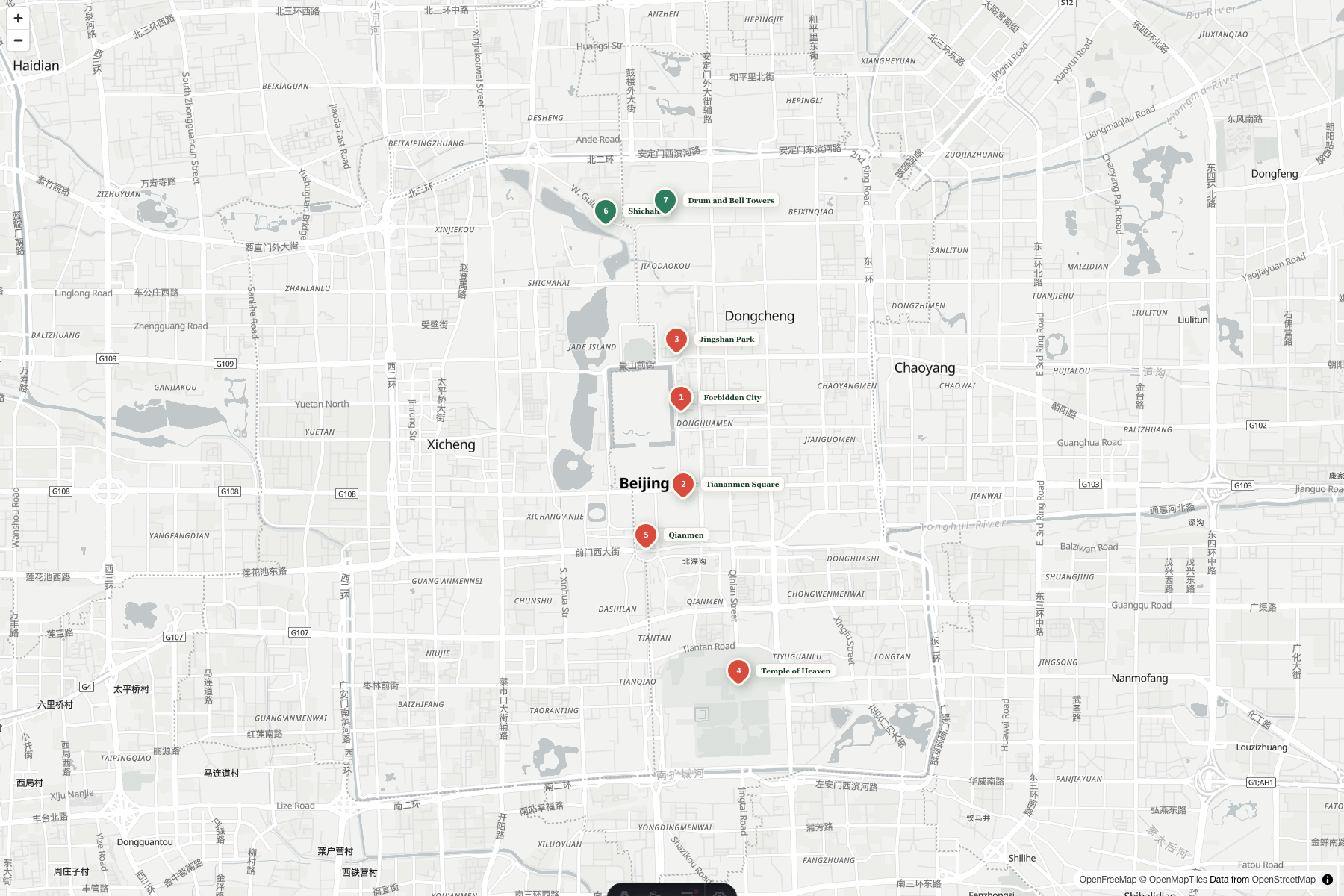
Live English map · OpenFreeMap
Put each day on one axis
Start with the compact historic centre, then reveal neighbourhoods, modern Beijing or full-day places. English names appear first and every selected pin keeps its Chinese name.
Loading the English map…
A useful city map of Beijing, China should answer one question before it lists landmarks: which places can share a day? Central Beijing is compact enough to connect the Forbidden City, Jingshan, Qianmen and nearby hutongs, but the Summer Palace, Great Wall and Universal Beijing sit on very different axes. I use the map above to expose that distance before I book timed entries.
The interactive layer is English-first and keeps the Chinese name on every selected pin. It is for orientation rather than turn-by-turn navigation. For offline planning, save the high-resolution Beijing tourist map PDF. Beijing also publishes an official English map, which is the better reference when you need a broader city service layer.
For the journey from the airport to your chosen district, use the PEK and PKX transport guide. The airport-train terminus still needs to connect to your hotel.
Read Beijing as five travel zones
| Zone | Main places | Time to allow | My planning rule |
|---|---|---|---|
| Imperial centre | Forbidden City, Tiananmen, Jingshan | Most of a day | Reserve the palace first, then build north–south |
| Southern historic axis | Temple of Heaven, Qianmen | Half to full day | Start in the park, finish around Qianmen |
| Hutong north | Shichahai, Drum and Bell Towers, Nanluoguxiang | Half day | Walk slowly; do not turn every lane into a checklist |
| Northwest | Summer Palace | Half to full day | Give it a separate block from the imperial centre |
| Outer excursions | Great Wall, Universal Beijing | Full day each | Never attach either to a timed central sight |
The old spelling “Peking” still appears in searches such as map of Peking, but current English maps and signs use Beijing. The place is the same; use “Beijing” in navigation apps and reservations.
The north–south axis is the first route to understand
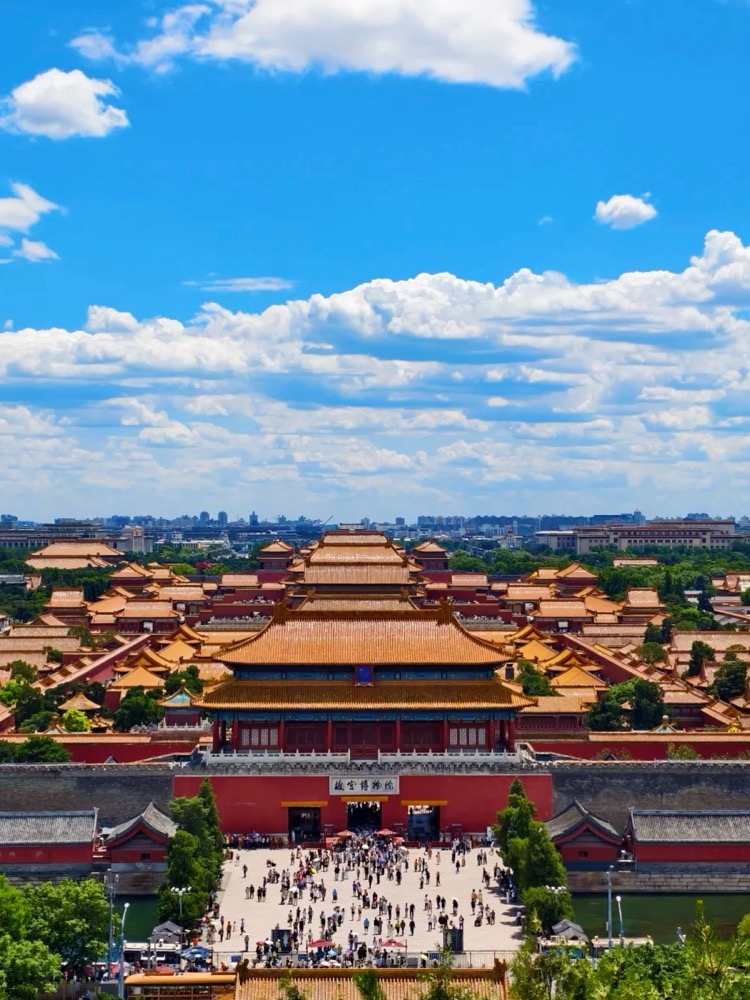
The Forbidden City is not a free-floating pin. Tiananmen lies south of it and Jingshan Park lies immediately north. If I secure a morning Palace Museum reservation, I enter from the permitted southern approach, walk through the palace and finish at Jingshan for the overhead view. That is one continuous line.
Temple of Heaven and Qianmen sit farther south. They can form another line, but I do not promise myself that all five places will fit comfortably around security checks, large compounds and fixed admission times.
The hutongs form a walking area, not one attraction
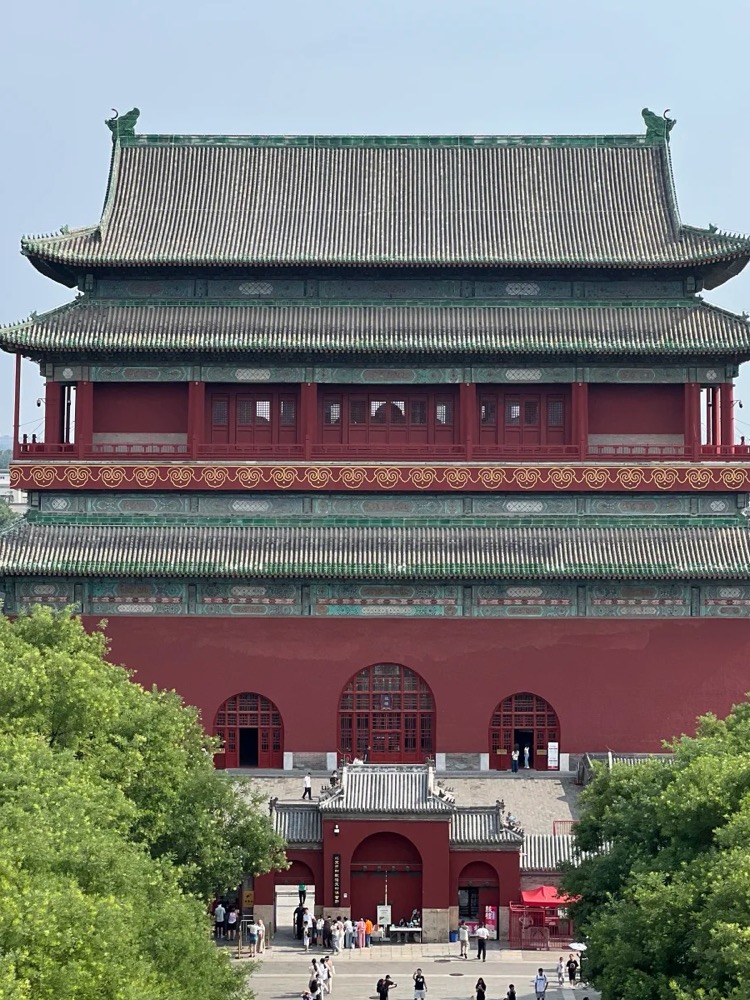
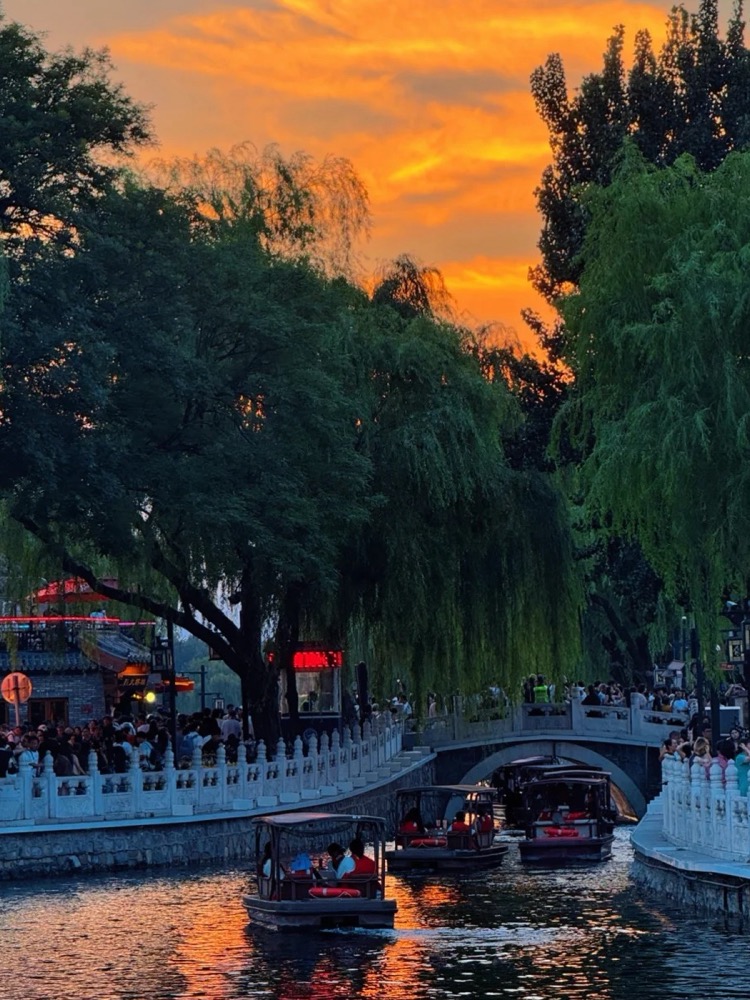
Shichahai, the Drum and Bell Towers and Nanluoguxiang are close enough to share half a day. The better experience comes from leaving the busiest lane and walking smaller streets, not from collecting three photo stops in twenty-minute blocks.
Save Chinese names — 什刹海, 钟鼓楼 and 南锣鼓巷 — because ride-hailing pickup points and map entrances are more precise than the broad English word “hutong.”
Summer Palace belongs on the northwest axis
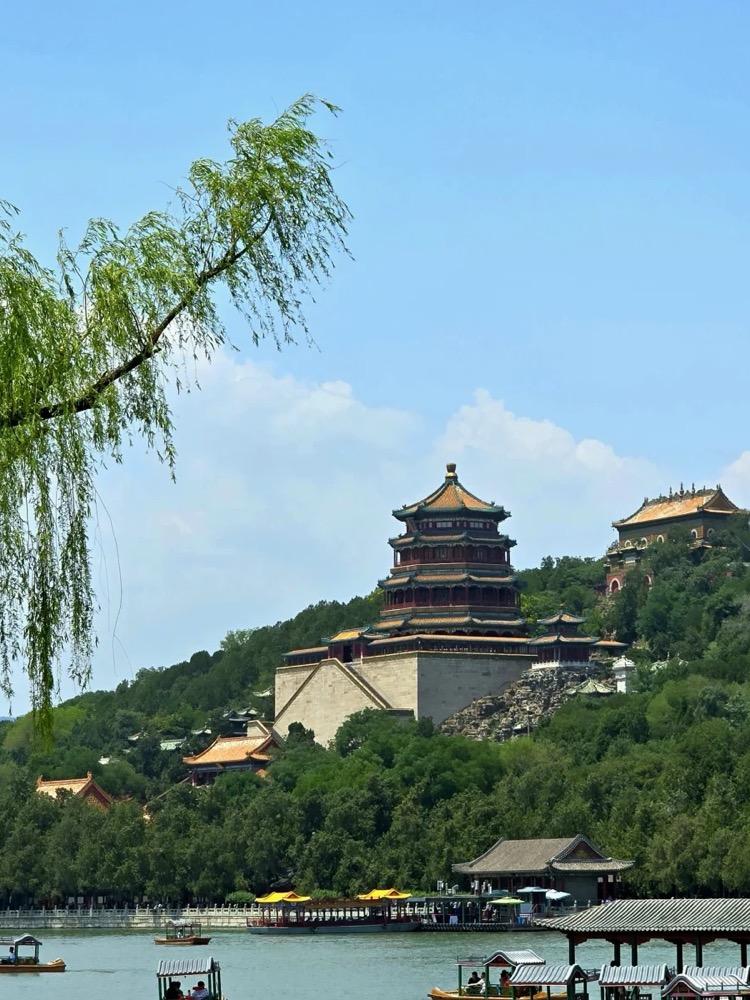
The Summer Palace is not next to the Forbidden City just because both are imperial sites. Its lake, long corridors and hill paths need time. I usually give it a separate half day and combine it only with another northwest stop when the route genuinely matters more than adding a headline sight.
Great Wall: choose one section, then give it the day
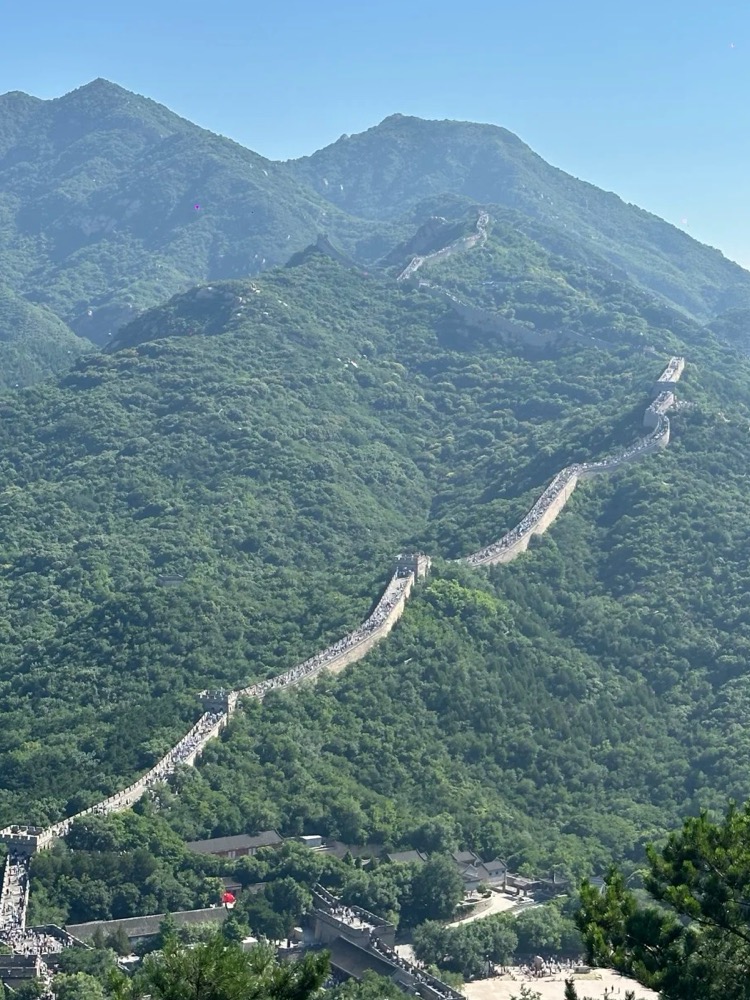
Mutianyu and Badaling appear on the wider map because the route choice matters. Mutianyu is commonly reached by road and offers a long restored section. Badaling has rail access and heavier visitor infrastructure. I choose one, start early and leave the central city itinerary alone.
Modern Beijing uses a different east and north loop
Sanlitun and 798 Art District work for restaurants, contemporary art and a break from imperial architecture. Olympic Green is farther north and is particularly effective near dusk. These places can be combined selectively, but traffic and venue opening hours matter more than straight-line distance.
Universal Beijing Resort is farther east in Tongzhou and deserves its own park day. A central Beijing hotel is not automatically the best base for an early park arrival.
Build a route from the map
One day: imperial centre
Tiananmen approach → Forbidden City → Jingshan → one hutong dinner area. This is the only one-day plan I would call recognisably Beijing without making it frantic.
Two days: add southern Beijing or a slower neighbourhood day
Keep the imperial route. On day two, choose Temple of Heaven → Qianmen, or a hutong walk → Shichahai → Drum and Bell Towers. I would not force both versions into one day simply because the map can display every pin.
Three days: choose one major outer preference
Use the third day for the Great Wall, Summer Palace, contemporary Beijing or Universal Beijing. Your preference matters more than a generic “top ten” ranking.
For attraction trade-offs, continue to things to do in Beijing. For the complete first-trip sequence, use the Beijing travel guide.
Names worth saving before you leave the hotel
| English | Chinese | Why save it |
|---|---|---|
| Palace Museum / Forbidden City | 故宫博物院 | Reservation and entrance searches use the museum name |
| Tiananmen Square | 天安门广场 | Security-controlled area with designated access |
| Jingshan Park | 景山公园 | The practical northern finish after the palace |
| Temple of Heaven Park | 天坛公园 | Park gates matter when planning the next transfer |
| Shichahai | 什刹海 | A broad lake and hutong area, not one doorway |
| Summer Palace | 颐和园 | Large site with several gates |
| Mutianyu Great Wall | 慕田峪长城 | Distinguishes it from other Great Wall sections |
| Badaling Great Wall | 八达岭长城 | Useful for rail and ticket searches |
| Universal Beijing Resort | 北京环球度假区 | Resort, station and hotel searches use related names |
Map tools I would actually use
The live map is built on OpenFreeMap and MapLibre, so it does not use our Google Maps account or require a Google API key. In mainland China, save a local navigation option such as Amap and the Chinese destination name. Apple Maps can also be practical on an iPhone. Google Maps is useful for recognising international place names, but I would not make it my only route tool in China.
Official references
Affiliate link — we may earn a commission at no extra cost to you. Booking is completed on Klook.