SHENZHEN FIELD GUIDE
Shenzhen for first-time visitors
Plan one to three days in Shenzhen by district: Futian for an easy first stay, Nanshan for coast and design, Luohu for the Hong Kong border, plus practical metro and airport advice.
- 1–2 day routes
- Hong Kong border choices
- Futian vs Nanshan
Shenzhen is not a compact old center with every sight around one square. It is a long east–west city, and the wrong pair of districts can turn a relaxed day into two hours of metro transfers. For a first trip, choose one urban side—Futian and Huaqiangbei, or Nanshan and Shekou—and add a second only when you have a full day.
Most visitors need two days: one for Futian’s civic core, Lianhuashan and Huaqiangbei; one for Nantou, Shenzhen Bay or Sea World. A Hong Kong day trip is possible, but the border crossing should match your final neighborhood and your passport’s entry eligibility. Do not choose Lo Wu automatically just because its name is familiar.
Is Shenzhen worth adding to a China trip?
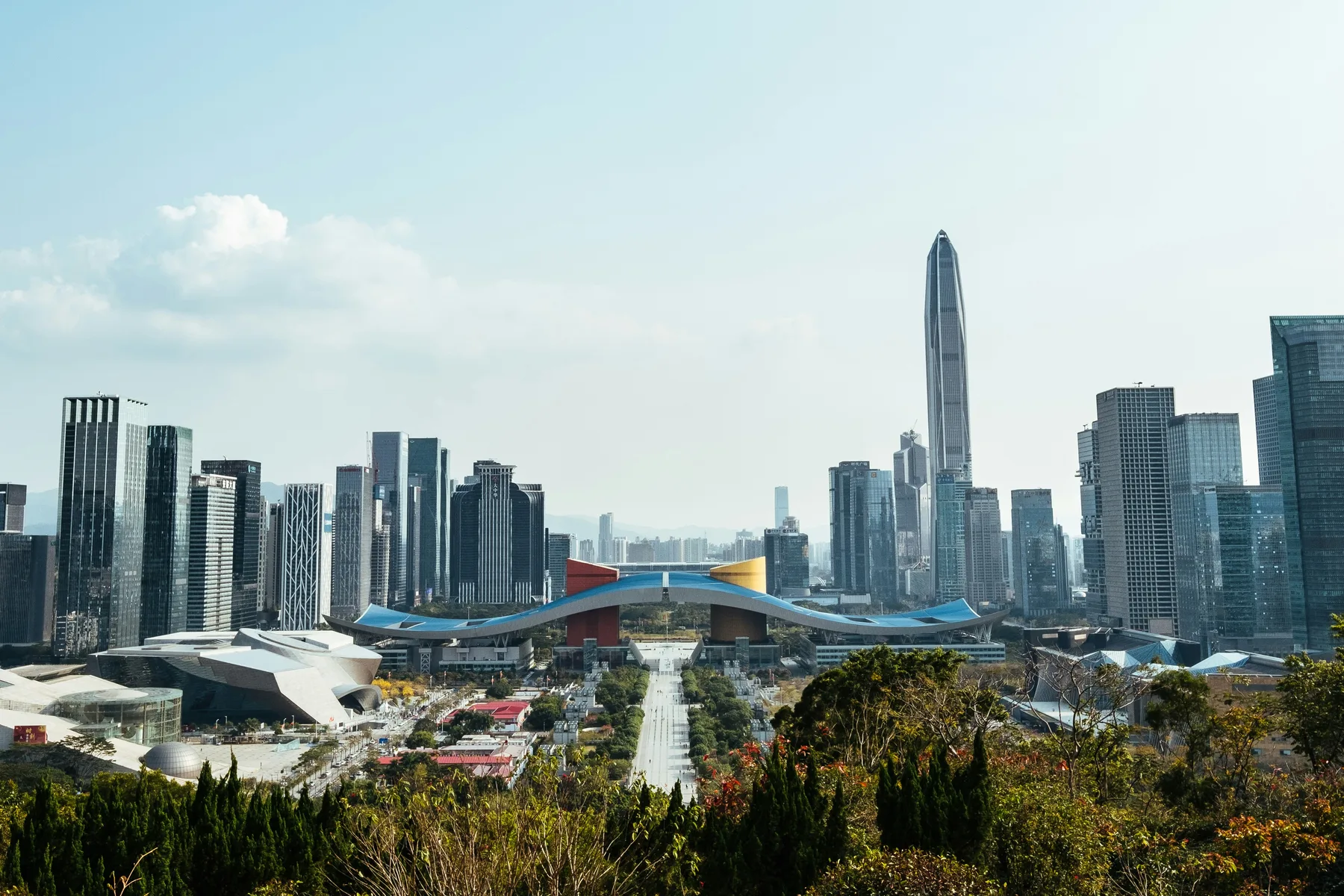
Shenzhen earns its place when you want a city that feels current rather than monumental. The useful contrasts are compressed into a metro ride: electronics counters in Huaqiangbei, the civic skyline around Futian, village-scale lanes in Nantou, technology campuses and waterfront parks in Nanshan, and an evening promenade in Shekou.
It is less rewarding if you expect a Beijing-style historic core or try to collect landmarks from every district in one day. Shenzhen works through neighborhoods. Leave space to walk after dark, sit by the bay, or explore one mall and its surrounding streets instead of commuting to a sixth photo stop.
How many days should you give Shenzhen?
| Time | A realistic plan | What to leave out |
|---|---|---|
| One day | Futian Civic Center, Lianhuashan Park and Huaqiangbei | Coast, Nantou and distant theme parks |
| Two days | The above, plus Nantou Ancient Town and Shenzhen Bay or Shekou | Dapeng Peninsula |
| Three days | Add a slow Qianhai, museum, design or coastal day | Do not add Dapeng without checking its road journey |
If you are crossing from Hong Kong and returning the same night, treat immigration time as part of the day. A nominal twelve-hour outing can lose two or three hours to reaching the border, document checks and the last journey back.
Choose your side of the city first
Futian and Huaqiangbei: easiest for a first visit
Futian is the most forgiving base. The Civic Center, museum area, Lianhuashan Park, Convention and Exhibition Center and several useful metro lines sit close together. Huaqiangbei is a short ride away and is still worth seeing even if you are not buying electronics: visit one or two buildings, compare floors, then leave before the similar counters blur together.
Stay here when you want a simple airport arrival, fast access to Futian Port, and a city evening that does not require a long return journey.
Nanshan, Shenzhen Bay and Shekou: coast, design and newer Shenzhen
Nanshan is better for a second day or a repeat visit. Nantou Ancient Town gives the area a human scale; Houhai and Shenzhen Bay show the contemporary skyline; Sea World in Shekou works for dinner and a waterfront walk. These places belong together far more naturally than with eastern Shenzhen.
The district is large. Pick either Nantou plus Shenzhen Bay, or a slower Shekou day. Window of the World and other theme parks can consume half or all of a day; add one only when it is the reason for visiting.
Luohu: useful, busy and border-led
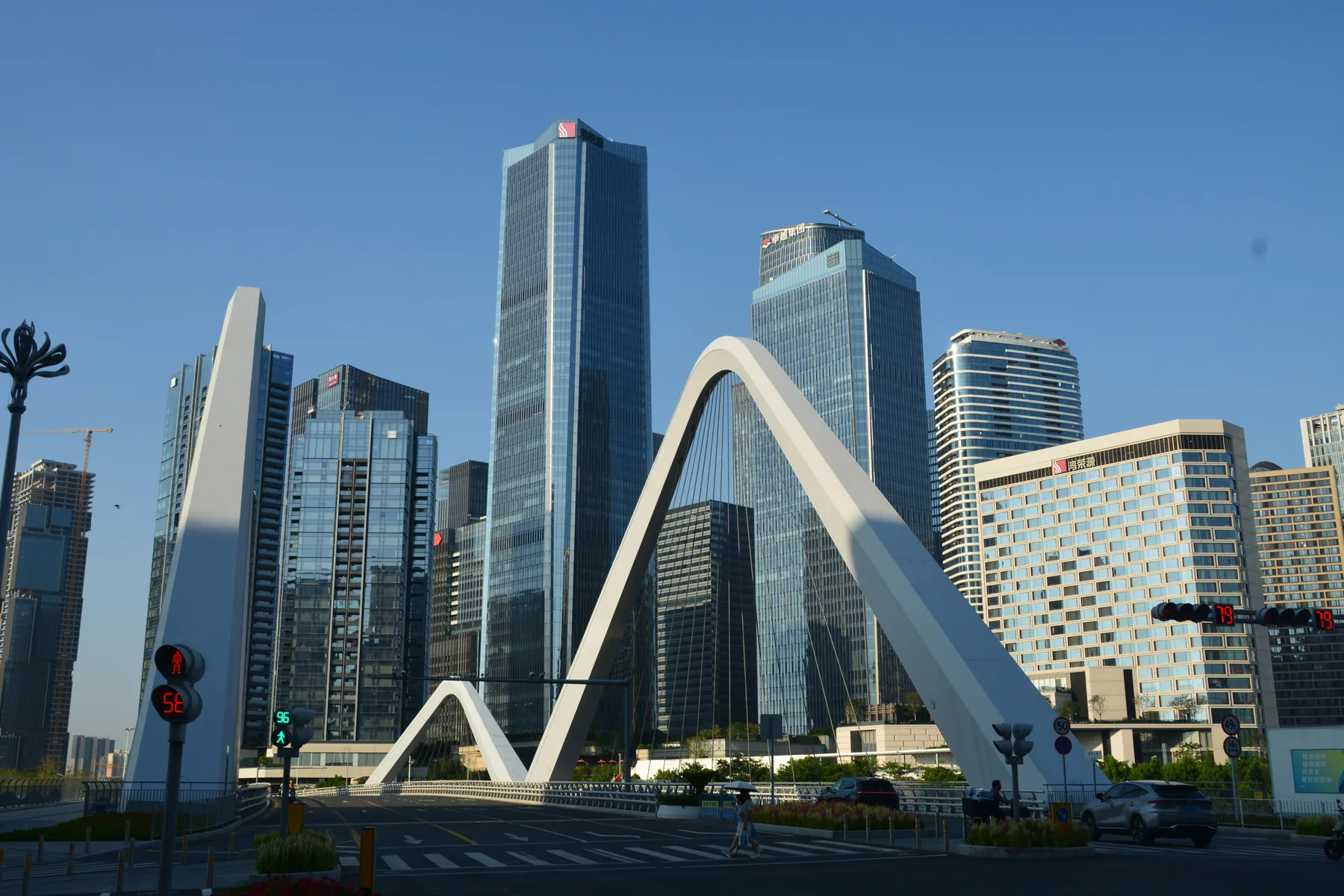
Luohu is practical for Lo Wu crossing and Shenzhen Railway Station. It is not the automatic best base for every traveler. Stay here if you have an early border or rail departure, or want old commercial streets nearby. For a coast-and-design trip, the daily westbound commute becomes tiring.
Qianhai and Bao’an: airport convenience and new-city architecture
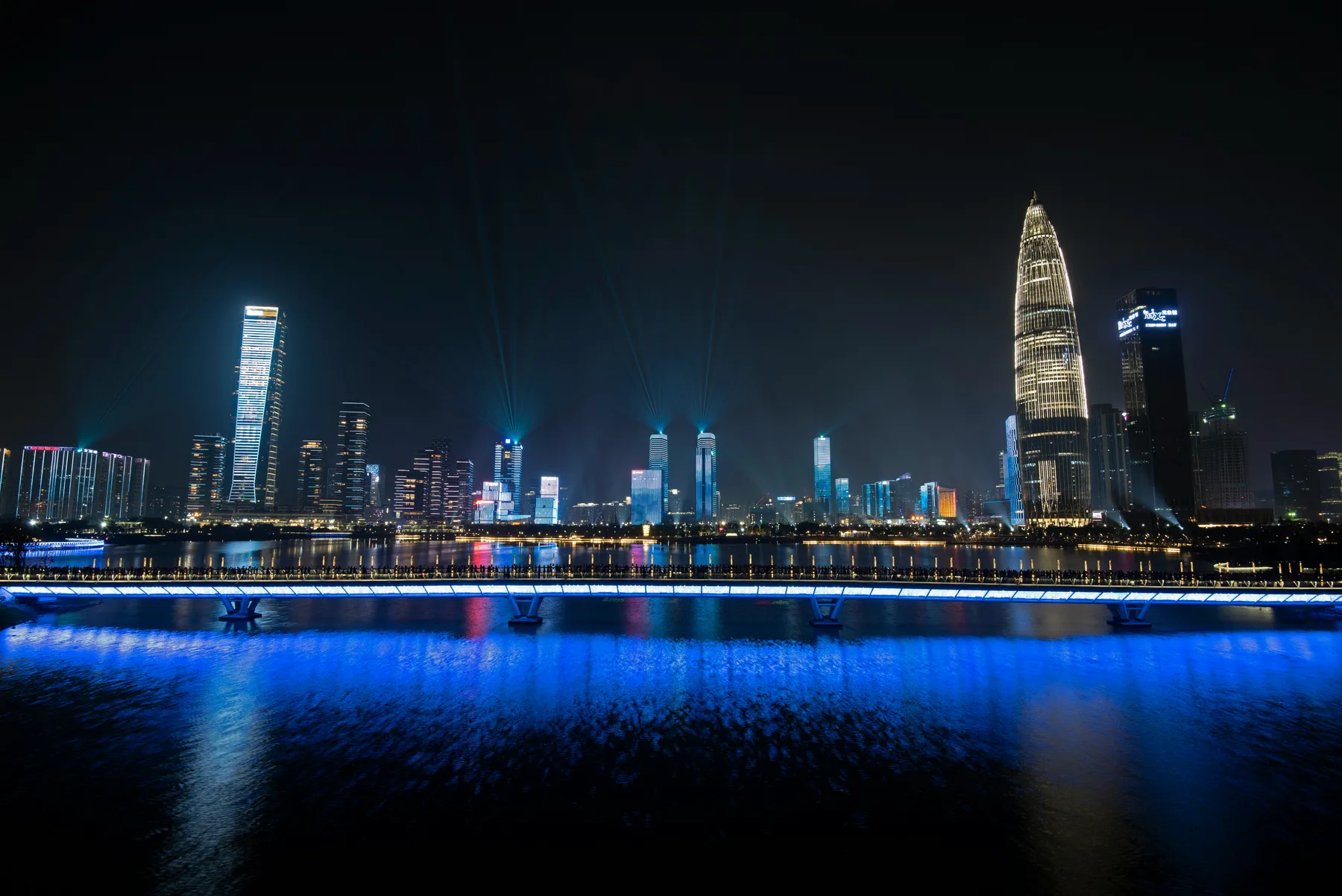
Qianhai is a good optional half-day for architecture, waterfront public space and a less familiar skyline. Bao’an becomes useful around the airport. Neither is the easiest first base if your priority list is Futian, Huaqiangbei and Nanshan.
A two-day Shenzhen plan that avoids zigzags
Day 1: Futian and Huaqiangbei
Start at Civic Center before the midday heat. Walk the public axis, then climb or stroll through Lianhuashan Park for the skyline view. After lunch, take the metro to Huaqiangbei. Choose one electronics building for components and one consumer-focused building; you do not need to inspect every tower. End in Futian around Coco Park or a quieter restaurant near your hotel.
Day 2: Nantou, the bay and Shekou
Begin at Nantou Ancient Town while its lanes are still calm. Continue toward Houhai or Shenzhen Bay Park for the long waterfront and skyline. If you want a longer evening, finish at Sea World in Shekou. If walking matters more than nightlife, remain around the bay and return before the commuter peak.
On a rainy day, replace the bay with a museum, design exhibition or one focused shopping area. Do not spend the storm transferring between distant indoor malls.
Coming from Hong Kong: choose the border by destination
| Crossing | Shenzhen connection | Best use | Current regular hours* |
|---|---|---|---|
| Lo Wu / Luohu | Metro Line 1 at Luohu | Luohu, Shenzhen Railway Station, east-central start | 06:30–00:00 |
| Lok Ma Chau Spur Line / Futian Port | Metro Lines 4 and 10 | Futian and easy central access | 06:30–22:30 |
| Huanggang | Road crossing; continue by road or connect onward | Late-night movement; vehicle crossing operates 24 hours | 24 hours |
| Shenzhen Bay | Bus and road connections | Nanshan, Shekou and western Shenzhen | 06:30–00:00 |
| Liantang / Heung Yuen Wai | Metro Lines 2/8 at Liantang Port | Eastern Shenzhen | 07:00–22:00 |
*Published regular passenger-service hours checked 2 August 2026. Holiday extensions and temporary arrangements change; verify with Hong Kong Immigration on the day. Entry eligibility is separate from border opening hours.
Futian Port is usually the cleanest choice for a first central-Shenzhen day. Shenzhen Bay can save a long cross-city ride when your hotel is in Nanshan. Huanggang’s 24-hour operation does not mean the metro runs 24 hours, so plan the onward road journey before using it late.
Metro, airport and daily transport
Shenzhen Metro covers the urban trip well, but station exits matter. Save the Chinese station name and exit before going underground. The network has security screening, and large interchanges take longer than the map suggests.
Since 30 June 2026, the metro has been trialling direct taps with eligible Visa, Mastercard, American Express and JCB cards across all 17 operating lines. Look for the card-network logo on the gate; the trial does not yet mean every gate accepts every card. Use the same physical card or mobile-wallet token to enter and exit. Start with the Shenzhen Metro map to match the line and Chinese station name; the Shenzhen Metro guide explains payment backups, Airport Line 11 and Hong Kong border stations.
Shenzhen Bao’an International Airport connects to Metro Line 11. It is fast for Futian and western districts, but an arrival near the last train needs a taxi or DiDi backup. Check the airport’s current timetable on the day rather than relying on an old screenshot.
Where to stay
| Area | Best for | Trade-off |
|---|---|---|
| Futian | First visits, business trips, central metro access | Hotels can be expensive on event dates |
| Huaqiangbei | Electronics and a short city stop | Busy streets; choose the exact metro exit carefully |
| Nanshan / Houhai | Coast, design, families and repeat visits | Farther from Luohu and eastern sights |
| Shekou | Slower evenings and ferry connections | Longer ride to Futian and Huaqiangbei |
| Luohu | Border and railway convenience | Less efficient for a west-Shenzhen itinerary |
Check the hotel’s nearest station, not only its district. A property described as “Shenzhen Bay” can still be an inconvenient walk from the metro.
Food and evenings
Shenzhen does not have one traditional cuisine that explains the whole city. That is the advantage: Cantonese dim sum and roast meats sit beside Chaoshan beef hotpot, Hakka dishes, Hunan and Sichuan food, and menus brought by migrants from across China.
For a first evening, eat near the district you have already chosen. Futian has the broadest convenient range; Shekou has a relaxed international mix; older Luohu streets are better for a less polished local meal. A famous restaurant on the other side of the city is rarely worth a forty-minute return ride.
Weather and timing
Late autumn through early spring is easiest for walking. Summer is hot, humid and storm-prone; build the day around early outdoor time and an indoor afternoon. Typhoon alerts can affect ferries, parks and flights even when the city center looks calm.
During major Chinese public holidays, border queues, hotels and theme parks change character. If Shenzhen is an add-on to Hong Kong, protect the border and train connection first, then keep the city schedule flexible.
Mistakes that waste the most time
- Treating “Shenzhen” as one compact center and crossing it repeatedly.
- Choosing a Hong Kong border by fame instead of final destination.
- Assuming an international card will work at every metro gate during the trial.
- Booking a “near the bay” hotel without checking the walking route to its station.
- Adding Dapeng Peninsula to a city day without reserving several hours for road travel.
- Spending the whole Huaqiangbei visit comparing the same product across similar counters.
Continue planning
- Shenzhen Metro map: all 17 lines, stations, airport and borders
- Shenzhen Metro guide: payment, airport and Hong Kong borders
- Alipay for foreign visitors
- China eSIM guide
- China visa-free entry guide
Official sources
Affiliate link — we may earn a commission at no extra cost to you. Booking is completed on Klook.