CHINESE CALENDAR
Chinese gender calendar: read the folklore chart
Look up a traditional Chinese baby gender chart with lunar age and conception month, understand 2026–2027 date boundaries, and check what the evidence shows.
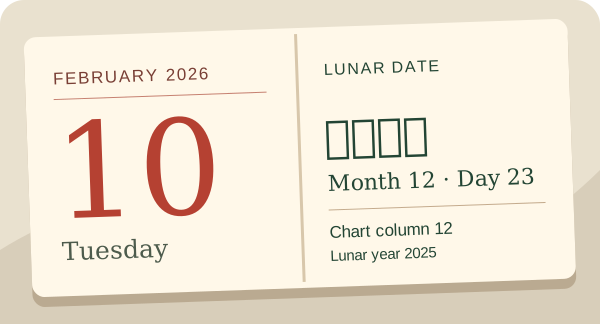
Read the folklore chart
This chart gives a traditional guess. It cannot tell you a baby’s sex.
Chinese gender chart: lunar ages 18–45
Find the age row and lunar-month column. B = boy; G = girl, as labels in this folklore version. The two dates above select a cell for you.
| Age / month | 1 | 2 | 3 | 4 | 5 | 6 | 7 | 8 | 9 | 10 | 11 | 12 |
|---|---|---|---|---|---|---|---|---|---|---|---|---|
| 18 | G | B | G | B | B | B | B | B | B | B | B | B |
| 19 | B | G | B | G | G | B | B | B | B | B | G | G |
| 20 | G | B | G | B | B | B | B | B | B | G | B | B |
| 21 | B | G | G | G | G | G | G | G | G | G | G | G |
| 22 | G | B | B | G | B | G | G | B | G | G | G | G |
| 23 | B | B | G | B | B | G | B | G | B | B | B | G |
| 24 | B | G | B | B | G | B | B | G | G | G | G | G |
| 25 | G | B | B | G | G | B | G | B | B | B | B | B |
| 26 | B | G | B | G | G | B | G | B | G | G | G | G |
| 27 | G | B | G | B | G | G | B | B | B | B | G | B |
| 28 | B | G | B | G | G | G | B | B | B | B | G | G |
| 29 | G | B | G | G | B | B | B | B | B | G | G | G |
| 30 | B | G | G | G | G | G | G | G | G | G | B | B |
| 31 | B | G | B | G | G | G | G | G | G | G | G | B |
| 32 | B | G | B | G | G | G | G | G | G | G | G | B |
| 33 | G | B | G | B | G | G | G | B | G | G | G | B |
| 34 | B | G | B | G | G | G | G | G | G | G | B | B |
| 35 | B | B | G | B | G | G | G | B | G | G | B | B |
| 36 | G | B | B | G | B | G | G | G | B | B | B | B |
| 37 | B | G | B | B | G | B | G | B | G | B | G | B |
| 38 | G | B | G | B | B | G | B | G | B | G | B | G |
| 39 | B | G | B | B | B | G | G | B | G | B | G | G |
| 40 | G | B | G | B | G | B | B | G | B | G | B | G |
| 41 | B | G | B | G | B | G | B | B | G | B | G | B |
| 42 | G | B | G | B | G | B | G | B | B | G | B | G |
| 43 | B | G | B | G | B | G | B | G | B | B | B | B |
| 44 | B | B | G | B | B | B | G | B | G | B | G | G |
| 45 | G | B | B | G | G | G | B | G | B | G | B | B |
This is one chart version, checked against two publicly displayed tables. Chart sources and conventions.
On this page
Does the Chinese gender calendar work?
It does not reliably predict a baby’s sex. A population-based study compared the method with 2,840,755 singleton births in Sweden and found performance no better than chance. The study also checked a subset using website-based lunar-date calculations; correcting the calendar conversion did not turn the chart into a reliable prediction method. Read the original study, Villamor and colleagues, 2010.
People search for this chart as the Chinese calendar baby gender predictor, Chinese pregnancy calendar or Chinese gender calendar. These names refer to a folklore lookup table. Here, “gender” is the common search label: the table assigns boy/girl labels and does not establish biological sex or gender identity.
You can explore the custom without treating its result as evidence. A different cell after correcting your age or month means that the lookup changed; it does not make that cell a medical finding.
How to read a Chinese baby gender calendar
The usual table has nominal lunar age down the side and lunar conception month across the top. Read the cell where that row and column meet. The visible chart above works without an account, and the interactive lookup highlights the cell it used.
- Enter the pregnant parent’s date of birth and the conception date you want to compare.
- Read the converted lunar year, month and day. The month is a number in the Chinese calendar, not the Gregorian month name.
- Check the nominal age. This version counts one at birth and adds one at each Chinese New Year.
- Find that age row and month column. Treat the displayed boy/girl label as a folklore guess.
The input is conception date, not the due date, birth date of the baby or first day of the last period. This tool does not work out a conception date from another pregnancy date. If you do not know the date you want to look up, it cannot resolve that uncertainty.
Is lunar age just Western age plus one?
That shortcut can give a different row around birthdays and Chinese New Year. In the convention used here:
Nominal lunar age = conception lunar year − birth lunar year + 1.
For example, a parent born on 20 January 1990 belongs to lunar year 1989. A lookup date of 10 February 2026 still falls in lunar year 2025. The nominal age is therefore 37, while Western age on that date is 36. The conception month is lunar month 12.
This is an age-counting convention used to read this chart. It is not a clinical measure of age. Our Gregorian–lunar converter shows the underlying dates if you want to check the calculation separately.
What changes in the 2026 and 2027 charts?
The year printed in a page title does not give a chart a new predictive ability. This tool uses the same circulating lookup matrix for both years. What changes is where the lunar months fall on Gregorian dates.
| Date range | Lunar-year context | Why it matters to the lookup |
|---|---|---|
| 1 January–16 February 2026 | Previous lunar year, 2025 | Do not increase nominal age merely because January 1 has passed |
| From 17 February 2026 | Lunar year 2026 begins | Nominal age increases at this boundary |
| 1 January–5 February 2027 | Still lunar year 2026 | A January 2027 conception is not automatically lunar month 1 |
| From 6 February 2027 | Lunar year 2027 begins | The next nominal-age and lunar-year boundary |
For instance, lunar month 1 of 2026 runs from 17 February to 18 March. Selecting Gregorian February as “month 2” would use the wrong column for a conception date in that interval. Lunar month 1 of 2027 runs from 6 February to 7 March.
Use the full Chinese calendar 2026 or Chinese calendar 2027 for every date and the start and end of each lunar month. Neither lunar year beginning in 2026 or 2027 has a leap month. Dates in early January belong to the preceding lunar year, so always check the converted result rather than only the Gregorian year number.
A baby due in 2027 and a conception date in 2026
Suppose a family expects a baby in early 2027 and enters 25 September 2026 as the estimated conception date. The conversion for that day gives lunar month 8, day 15. Read column 8 with the mother’s nominal age on that September date. The due date and the baby’s eventual birthday do not enter the calculation. If all you know is the due year, you do not have enough information to select a column.
What if the date is in a leap month?
A leap month repeats a lunar month number. A twelve-column chart has no separate universal column for that extra month. Circulating instructions disagree: some reuse the same month, while others split the leap month between neighboring columns.
This lookup does not silently choose a rule. It displays the converted leap-month date and leaves the boy/girl label blank. If you are comparing a family chart, use that chart’s stated convention. Do not change rules until you get a preferred label.
For example, 25 July 2025 is the first day of leap lunar month 6. The ordinary sixth month and leap sixth month are different date ranges. You can inspect that date in the converter.
Why do two websites show different results?
Compare the inputs before comparing the label:
| Difference | What to check |
|---|---|
| Age row | Lunar-year counting versus a simple age-plus-one shortcut |
| Month column | Converted lunar month versus Gregorian January–December |
| Input date | Conception date versus last period, due date or baby’s birthday |
| Leap month | Whether the site repeats, splits or declines the extra month |
| Table version | Whether the two charts actually have the same labels in the same cells |
The birth date and conception date here are treated as calendar dates. We do not convert a time of day or infer a location from your browser. If the date you have recorded in another country is uncertain around midnight, this tool cannot reconstruct the original event in China time.
Which chart version is used?
The displayed matrix covers nominal ages 18–45 and lunar months 1–12. We compared all 336 labels in two publicly displayed versions on 20 November 2026. The labels agreed. The data for ages 18–31 is recorded from ChineseGenderCalendar.org’s chart; ages 32–45 are recorded from ChineseGenderPredictor.net’s chart.
This identifies the version used here. It does not establish a single original, official or historically authenticated chart. Stories about a palace discovery or a centuries-old manuscript are not evidence that the table predicts a baby’s sex.
An age outside 18–45 is outside this table. The tool still shows the date conversion where supported, but does not invent an extra row. Invalid dates and a conception date before the parent’s birth date are rejected.
Calendar questions that this tool can answer
For cultural curiosity, the useful result is seeing how the dates and age were interpreted. You can check the same day in the main calendar converter, find a birth-year animal with the Chinese zodiac calculator, or browse China’s culture guides.
References
- Villamor et al., Accuracy of the Chinese lunar calendar method to predict a baby’s sex, 2010 — original population study.
- Hong Kong Observatory: the Chinese agricultural calendar — calendar structure, separate from the gender folklore table.
- HKO 2026 date conversion table and HKO 2027 date conversion table — Gregorian/lunar boundaries.