Menus, QR codes and the words that matter
How to order food in China: read the menu, then order
Learn how to order food in China from a Chinese food menu, table QR code or street stall, with dish names, allergy wording and manual fallbacks.
- QR, paper and counter ordering
- 10 recognisable dishes
- Allergy and dietary wording
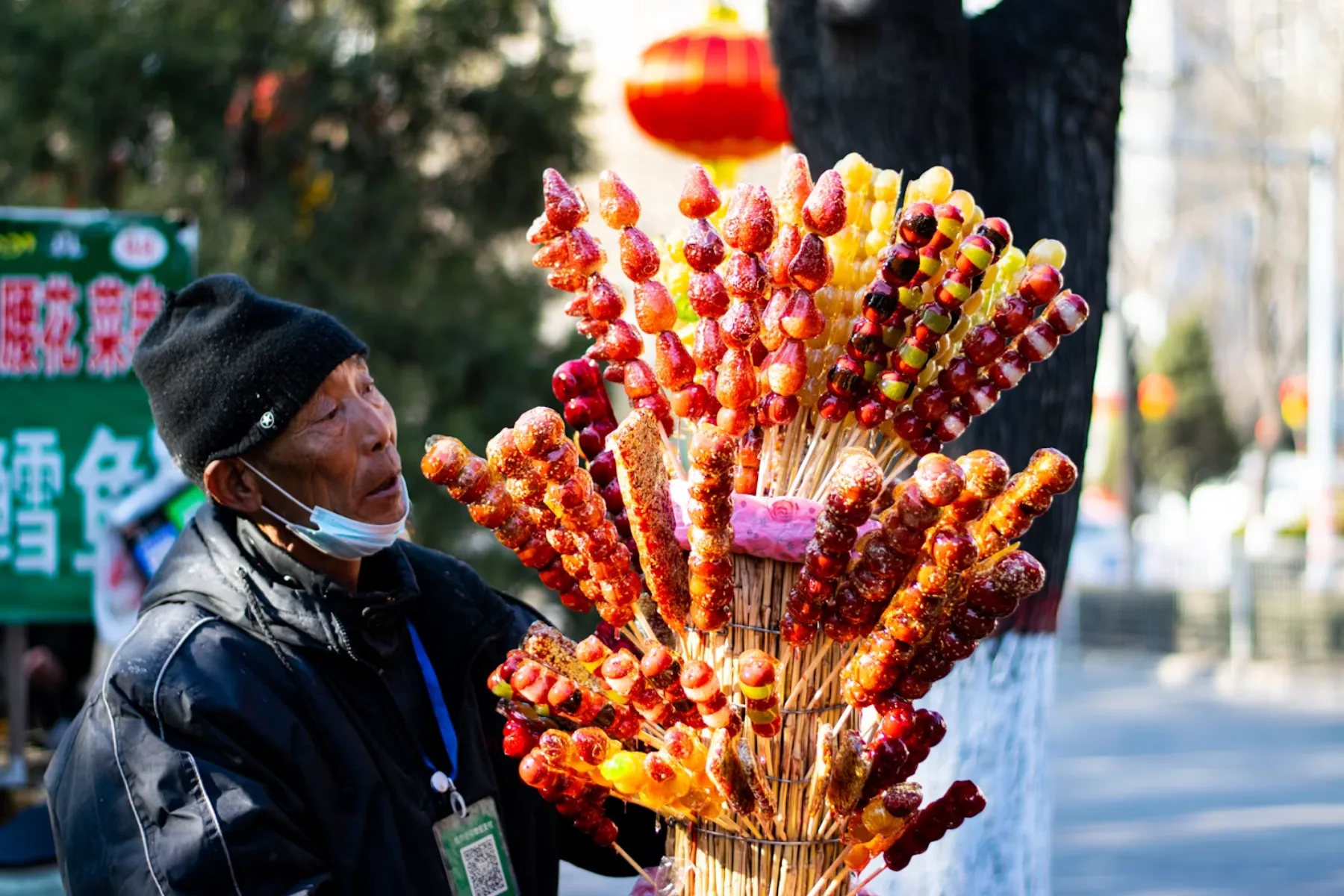
Ordering in China may mean pointing at a tray, reading a paper menu or completing the whole meal inside a table-QR mini-program. Start with the menu in front of you. If the QR flow asks for a local number, login or unfamiliar payment step, ask staff to enter the order, provide a paper menu or direct you to the counter.
First identify the menu you have
| What you see | Best move |
|---|---|
| Photo or bilingual paper menu | Point to the item, confirm quantity and ask about spice or allergens |
| Chinese-only paper menu | Use camera translation, then confirm the dish name with staff |
| QR code at the table | Try it once; if login, +86 phone or payment blocks you, ask staff to take the order |
| Display counter or street stall | Point, show quantity with fingers and ask the price before ordering |
| No visible menu | Ask 有菜单吗?(Yǒu càidān ma?) — Do you have a menu? |
Do not assume every QR code is only a menu. It may open ordering, queueing, membership or payment. If it asks for unnecessary identity details, stop and ask for another route.
When the QR menu does not work
Say 我扫不了这个码 (Wǒ sǎo bù liǎo zhège mǎ) — I cannot scan this QR code. Then point to one of these options:
- Staff enter the order on their device.
- Staff provide a paper or tablet menu.
- You order at the counter.
- You pay at the cashier after eating.
Some systems work only after joining a queue or linking a domestic number. Traveler discussions show that this is a common point of confusion, while staff-assisted ordering remains the practical fallback. Do not hand passport or card details to an unofficial helper. See traveling without a Chinese phone number for the broader fallback stack.
Ten dishes that are easy to recognize
How to read a Chinese food menu
The last two or three characters often tell you what will happen to the ingredient.
| Chinese | Pinyin | Cooking signal |
|---|---|---|
| 炒 | chǎo | stir-fried |
| 烤 | kǎo | roasted or grilled |
| 蒸 | zhēng | steamed |
| 煮 | zhǔ | boiled or cooked in liquid |
| 炸 | zhá | deep-fried |
| 红烧 | hóngshāo | red-braised in a dark, savoury-sweet sauce |
| 清汤 | qīngtāng | clear broth |
| 麻辣 | málà | numbing and spicy |
| 酸辣 | suānlà | sour and spicy |
This is why 鱼香茄子 cannot be decoded by translating every character literally: “fish-fragrant eggplant” describes a Sichuan flavour profile and does not necessarily contain fish. Treat camera translation as a clue, then confirm the dish if an ingredient matters.
The five sentences that solve most orders
- 我要这个 — Wǒ yào zhège — I want this one.
- 两个 — Liǎng ge — Two of them.
- 不要辣 — Bù yào là — Not spicy, please.
- 少辣 — Shǎo là — Less spicy.
- 买单 — Mǎidān — The bill, please.
Open the traveler phrase cards if you need a large Chinese sentence to show at the table.
Allergies: show the exact ingredient
Use both the allergy statement and the “do not add” statement. Ask staff to confirm what is already in sauces, oils, broth and garnishes.
我对花生过敏。Wǒ duì huāshēng guòmǐn.I am allergic to peanuts.
这个里面有花生吗?Zhège lǐmiàn yǒu huāshēng ma?Does this contain peanuts?
请不要放花生。Qǐng bù yào fàng huāshēng.Please do not add peanuts.
Replace 花生 (peanut) with the ingredient you need: 坚果 jiānguǒ nuts, 牛奶 niúnǎi milk, 鸡蛋 jīdàn egg, 虾 xiā shrimp, or 小麦 xiǎomài wheat. These sentences communicate the request; they do not certify a kitchen as free of an allergen. Cross-contact is possible, and staff may not know every packaged sauce ingredient. If an exposure could be severe, use a professionally translated medical card, carry prescribed medication and follow your clinician’s plan.
Vegetarian, vegan and halal requests
我吃素 (Wǒ chī sù) means “I eat vegetarian food,” but interpretations vary. A dish without visible meat may still use meat broth, lard, oyster sauce or a small garnish.
For a clearer request, combine what you do not eat:
- 我不吃肉 — Wǒ bù chī ròu — I do not eat meat.
- 我不吃鸡蛋和奶制品 — Wǒ bù chī jīdàn hé nǎizhìpǐn — I do not eat eggs or dairy products.
- 不要用肉汤 — Bù yào yòng ròutāng — Do not use meat broth.
For halal food, look for an established 清真 (qīngzhēn) restaurant rather than asking an unrelated kitchen to convert a dish. The word is a useful sign, not a substitute for your own standard or verification.
Paying after the meal
Restaurants may expect payment at the table QR, at a cashier, or through a staff-presented code. Confirm the total on your own screen before approving it. If a foreign card in Alipay fails, use a second linked card, cash, or another accepted method rather than repeatedly authorizing the same transaction.
Set up Alipay for foreigners before departure and keep the China payment backup plan available offline.
A simple first meal plan
For the least stressful first meal, choose a busy restaurant with a visible menu, order one staple plus one or two dishes, and confirm the spice level before the order is sent. Photograph the dish names you liked. By the third meal, your saved list will be more useful than a generic “best Chinese food” list because it matches your own tastes and dietary needs.