Shopping in China
What to buy in China and where to find it
Find gifts along your China itinerary, from Shanghai sweets and Hangzhou tea to Suzhou fans and Jingdezhen cups. Compare prices, read labels and plan the trip home.
On this page
If you’re bringing gifts home for a group, a bag of Shanghai’s White Rabbit milk candy is an easy first purchase. For someone who makes tea every morning, spend your time at a tea counter in Hangzhou. For a keepsake of your own, try the shop at the museum you liked best. A tiny replica of a crown you saw in Beijing will probably bring the day back more vividly than a second suitcase full of gifts.
Where you buy matters. A supermarket is a good place to compare pack sizes. A studio is worth a detour when you want to meet the person who painted your cup. And one of the best places to find an inexpensive Shanghai souvenir is inside a metro station.
Which souvenirs fit your trip?
| Who it’s for | What to buy | Where to find it |
|---|---|---|
| Friends who like sweets | White Rabbit milk candy. ¥29 per 200 g gift tin. The shopper bought one original and one red bean tin (¥58 for both). | Shanghai · White Rabbit, Nanjing Road Huiluo shop (大白兔南京路惠罗专卖店). Receipt dated 26 August 2026. |
| A tea drinker | Loose Longjing. ¥90 at ¥120 per jin (500 g). That works out to about 375 g. | Hangzhou · Jiefang Road Tea Wholesale Market, Section 3, stalls 18–19 (解放路茶叶批发市场三区18–19号). The buyer had made the purchase by 25 September 2026, when they posted their account. |
| Someone who enjoys handmade pottery | One ceramic mug, ¥49. The buyer chose a dark, handled mug with a wavy rim and paired it with a separate ¥34 spotted plate. | Jingdezhen · Pengye (朋也), Sculpture Porcelain Factory. The buyer placed the shopping trip in late August 2026. |
| A friend who cooks | Pixian fermented chilli bean paste (郫县豆瓣) | The condiment aisle in Chengdu |
| A child or a toy collector | A panda plush (熊猫玩偶) or a designer figure | Chengdu Panda Base or a POP MART shop |
| Someone who likes art | A Suzhou folding fan (折扇) or woodblock print (木版年画) | A craft shop in Suzhou |
| Someone who wears their gifts | A silk scarf (真丝丝巾) or a garment made to measure | A textile shop in Suzhou or a tailor in Shanghai |
| Someone you haven’t met yet | A museum bookmark (书签) or metro magnet (冰箱贴) | A museum shop or a Shanghai Metro souvenir machine |
Shanghai sweets and Sichuan pantry gifts
A bag of White Rabbit for the people back at work
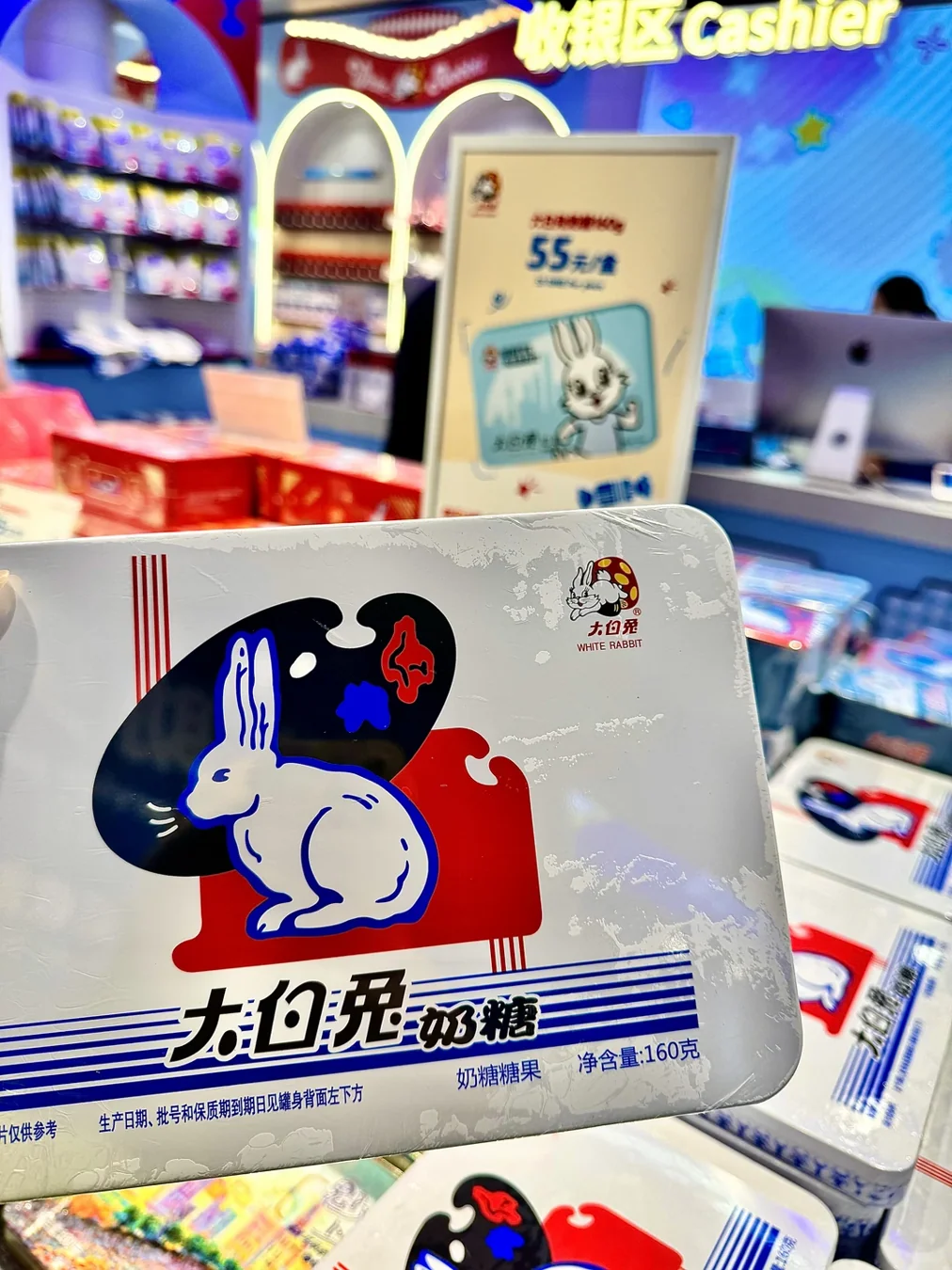
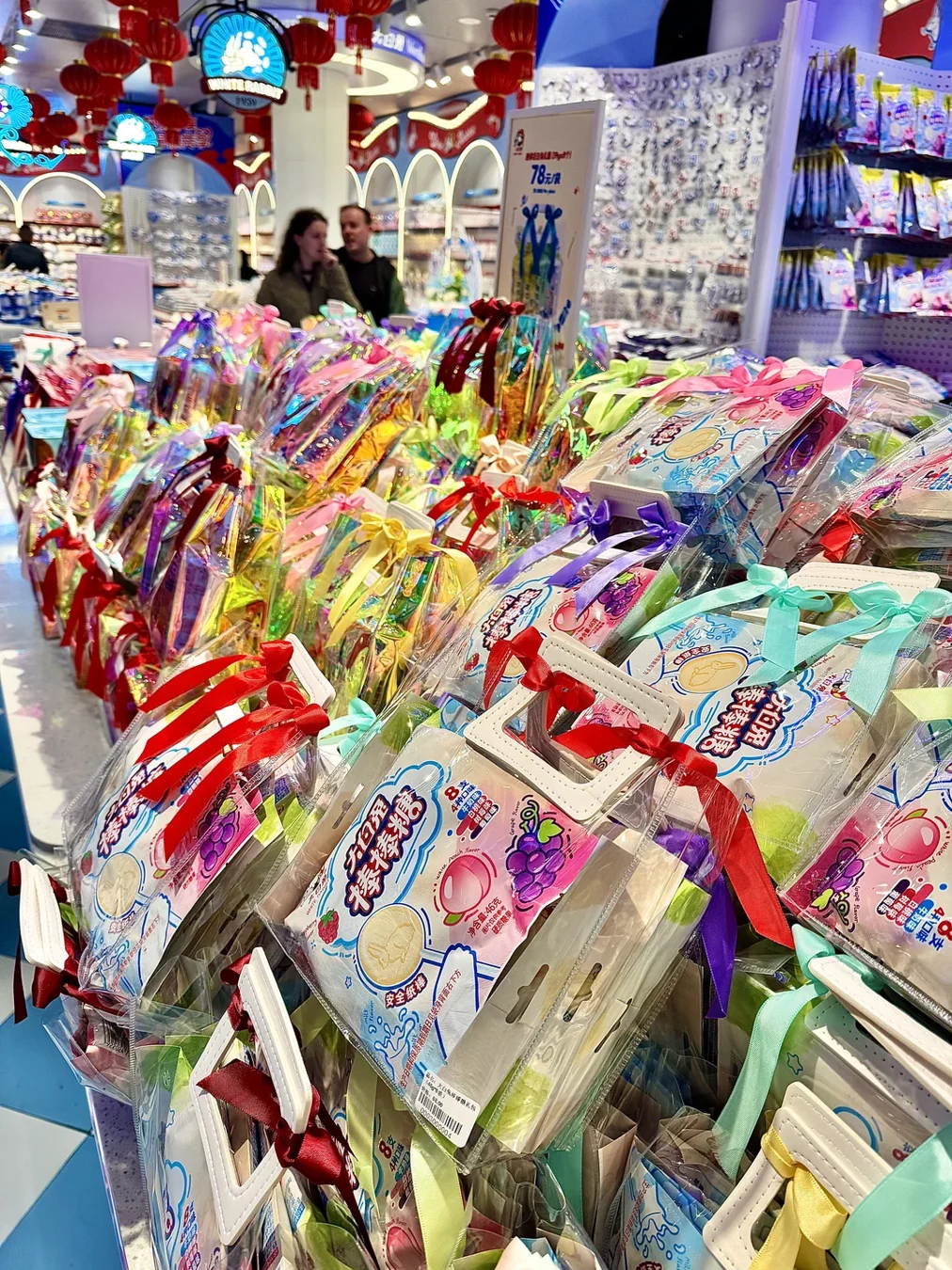
In Shanghai, look for 大白兔奶糖 in the sweet aisle. The classic is a chewy milk candy with a little white rabbit on the wrapper. If you’re already walking along East Nanjing Road, Shanghai First Foodhall (第一食品商店) is a convenient stop for this and other local sweets. A supermarket near your hotel is enough if you’re buying several bags of the same flavour. Shanghai’s guide to local sweets
For a price comparison, SMBC Trust Bank’s travel writers recorded about 20 yuan for a 227 g bag. That works out to about 8.8 yuan per 100 g, compared with 14.5 yuan per 100 g for the 200 g gift tin on the Huiluo receipt. These examples come from separate shopping visits. The same brand also sells souvenir packaging. For an office, check how many people you need to cover before paying extra for a tin. The number beside 净含量 is the net weight. Ask 这袋里有多少颗? for the number of sweets. Keep the outer bag so anyone with a milk allergy can see the ingredients. SMBC’s supermarket shopping guide
Buying pastries for the office? Look inside the box
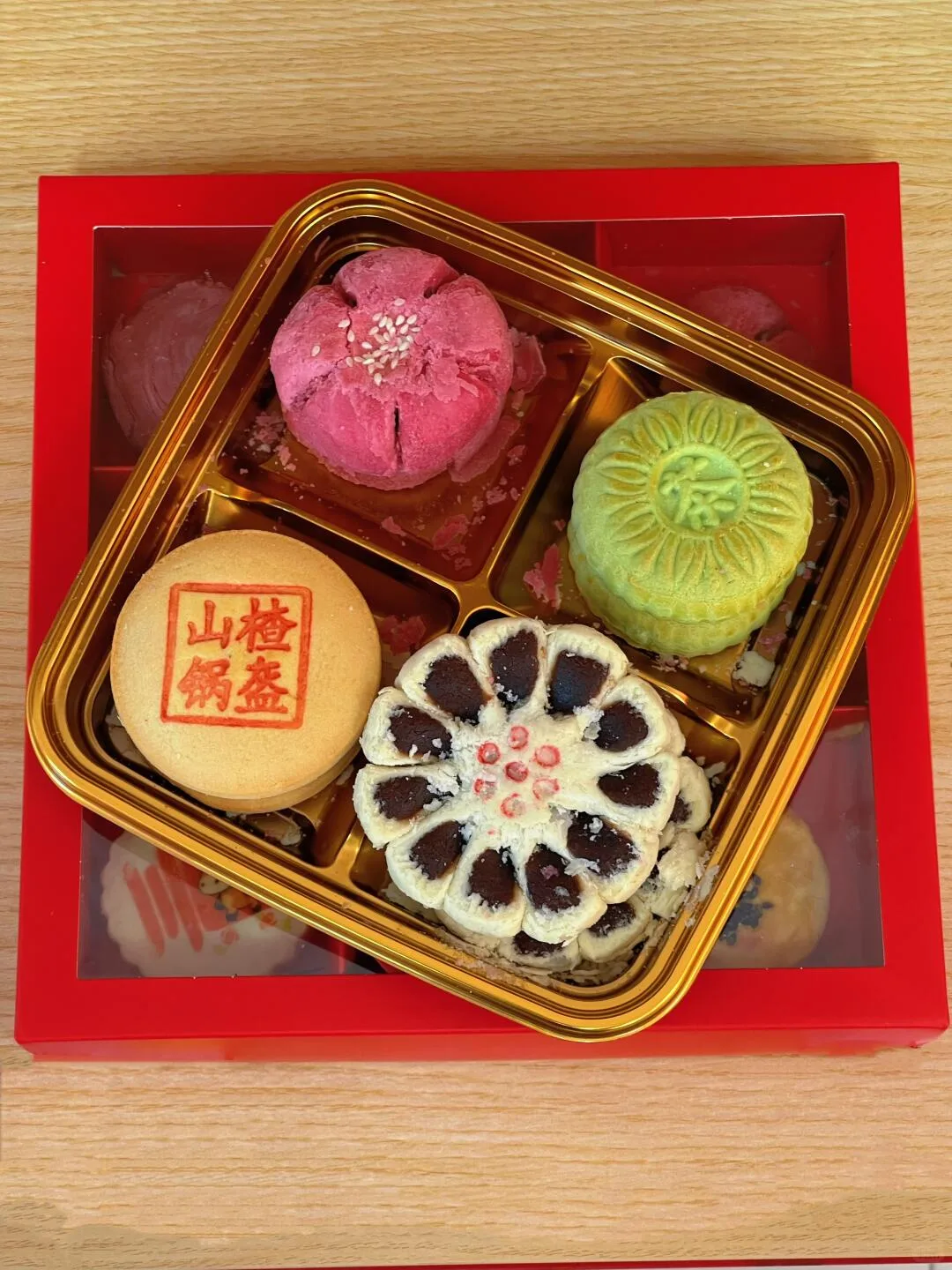
In the Beijing pastry box pictured at the top of this guide, four cakes sit in one tray. The pale one is stamped 山楂锅盔. The first two characters, 山楂, mean hawthorn. If you want gifts for colleagues, ask 有独立包装的吗? (“Are any individually wrapped?”). A tray for one household and a box you can split between four desks can look identical with the lid closed.
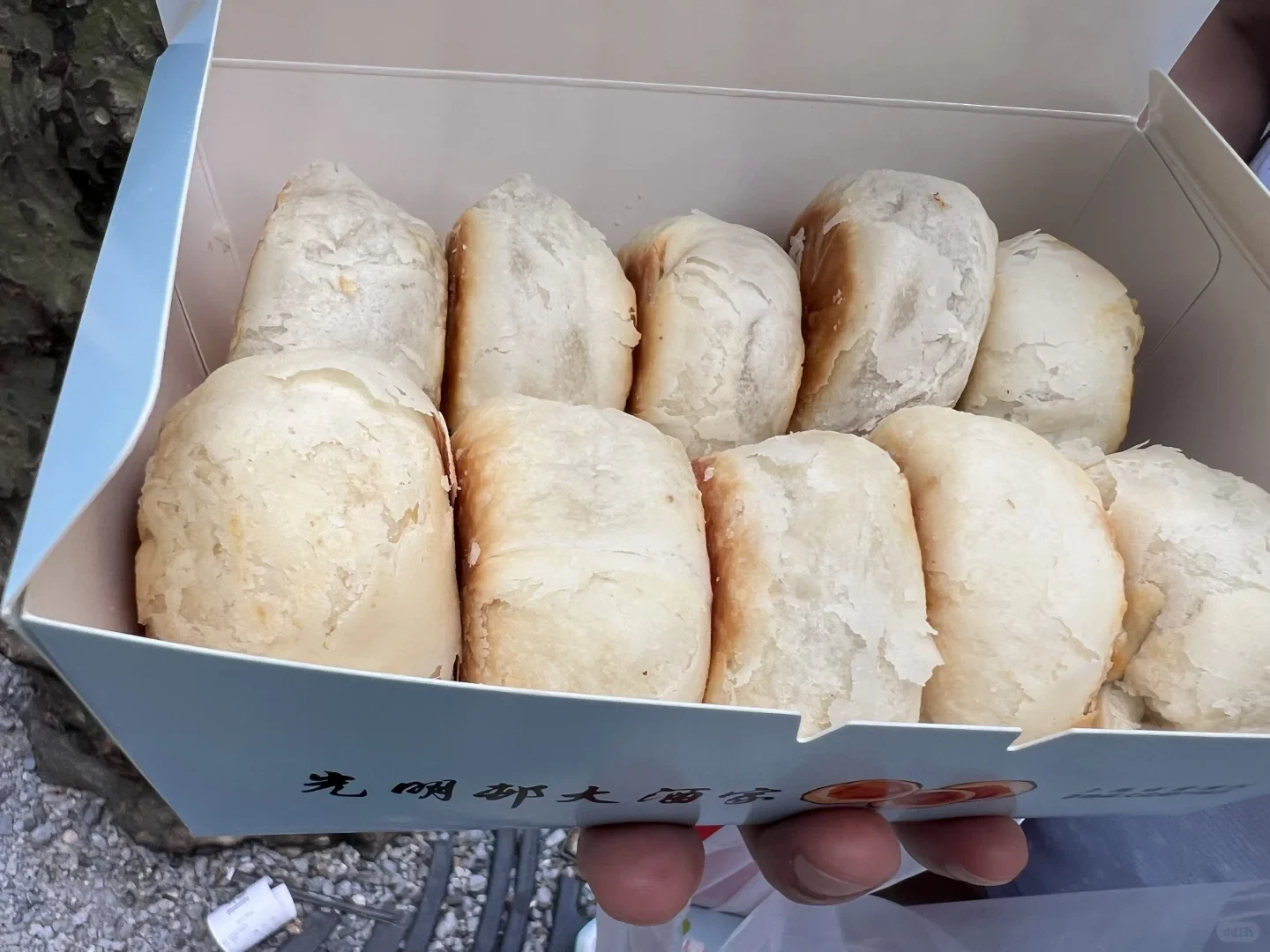
In Shanghai, a plain, flaky crust can hide a savoury filling. At Guangmingcun (光明邨) on Huaihai Road, look for 鲜肉月饼 if you want to try a fresh meat mooncake. The identifying word is 肉 (meat). The way to tell at the counter is to read the name or ask about the filling. For a flight home, keep the ingredient label and check your destination’s rules before buying a box.
A taste of Chengdu for someone who cooks
If a friend asked how to make the mapo tofu you ate in Chengdu, buy a small sealed pack of 郫县豆瓣. This fermented broad-bean and chilli paste comes from Chengdu’s Pidu district. It gives the dish its savoury base. A good gift is the paste plus a note naming the dish you ordered, especially if your friend would otherwise use it as a table sauce. The traditional recipe contains wheat flour, so read 配料表 (ingredients) if gluten matters to the recipient. Pixian Douban’s ingredients and culinary uses
Look on the condiment shelf for a factory-sealed packet small enough to finish after opening. A glass jar adds weight and can leak. Carry the paste in a second sealed bag and check the food-import and cabin-baggage rules for your journey. If the recipient is travelling with hand luggage only, buy the paste for a meal in China and give them the recipe and a photo of the label to take home.
How to buy tea in Hangzhou or Suzhou
Hangzhou’s Longjing makes sense after a walk around West Lake. Look for the long, flattened green leaves. Suzhou’s Biluochun is another local green tea, with much smaller, curled leaves. If both cities are on your itinerary, two small packets let a tea drinker brew them side by side. For someone who drops a bag straight into a mug, look for 袋泡茶 (tea bags). Hangzhou’s West Lake Longjing growing area · Suzhou’s local specialities
At a specialist counter, ask for the price and weight before a tasting. A handwritten price might be per 50 grams, per packet or per 斤 (500 grams in mainland China). If a tea costs 300 yuan per jin, 50 grams at that rate comes to 30 yuan before any extra charge for the tin. Ask to taste the batch you intend to buy and take a photo of its label. On a gift packet, look for the origin (产地), net weight (净含量) and production date (生产日期). Our guide to buying tea in China
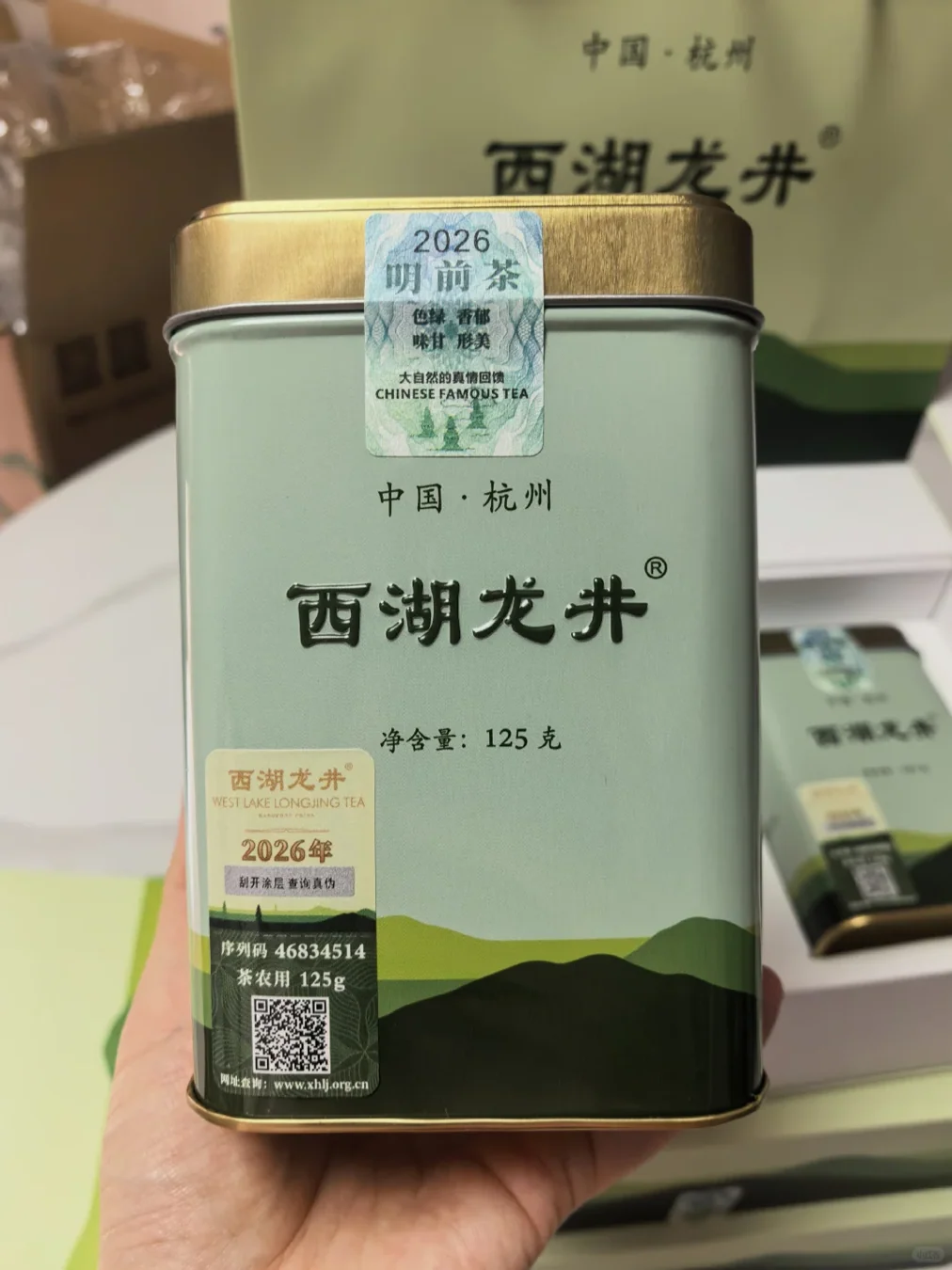
What justifies a higher price? The words 西湖龙井 refer to a protected origin. An early harvest and hand processing can push prices much higher. A grower interviewed in Hangzhou in March 2026 quoted over 10,000 yuan per 500 g for hand-processed tea from the first harvest. That’s a particular grower’s premium crop. For a friend who simply enjoys green tea with breakfast, ask for an everyday tea in a small labelled packet and spend the difference on something else. Hangzhou’s first-harvest report
Gifts for children, collectors and people who love museums
In Chengdu, the Panda Base has several souvenir shops. The teahouse by Swan Lake also sells plush toys and magnets, so a group taking a tea break can shop there without retracing the whole visit. For a child, look at the age marking and feel how firmly the eyes and small parts are attached. For a friend who already owns several panda toys, send a postcard with the name of the panda you watched. China Post has a Panda Post branch at the base. Panda Base shopping directory · China Post’s Panda Post branches
In Beijing, the National Museum of China makes a fridge magnet modelled on the phoenix crown of Ming empress Xiaoduan. If that’s the one you want, go to the National Museum by Tiananmen Square. The Forbidden City houses a different collection. The National Museum directs visitors inside the building to reserve the magnet in Alipay’s 国博衍艺 mini program, then show ID at the pickup counter. Check availability in the app that day. If you just want a memento of a favourite exhibit, photograph its label and ask in the museum shop for a postcard or bookmark with the same motif. The museum’s reservation and pickup instructions · The story behind the design
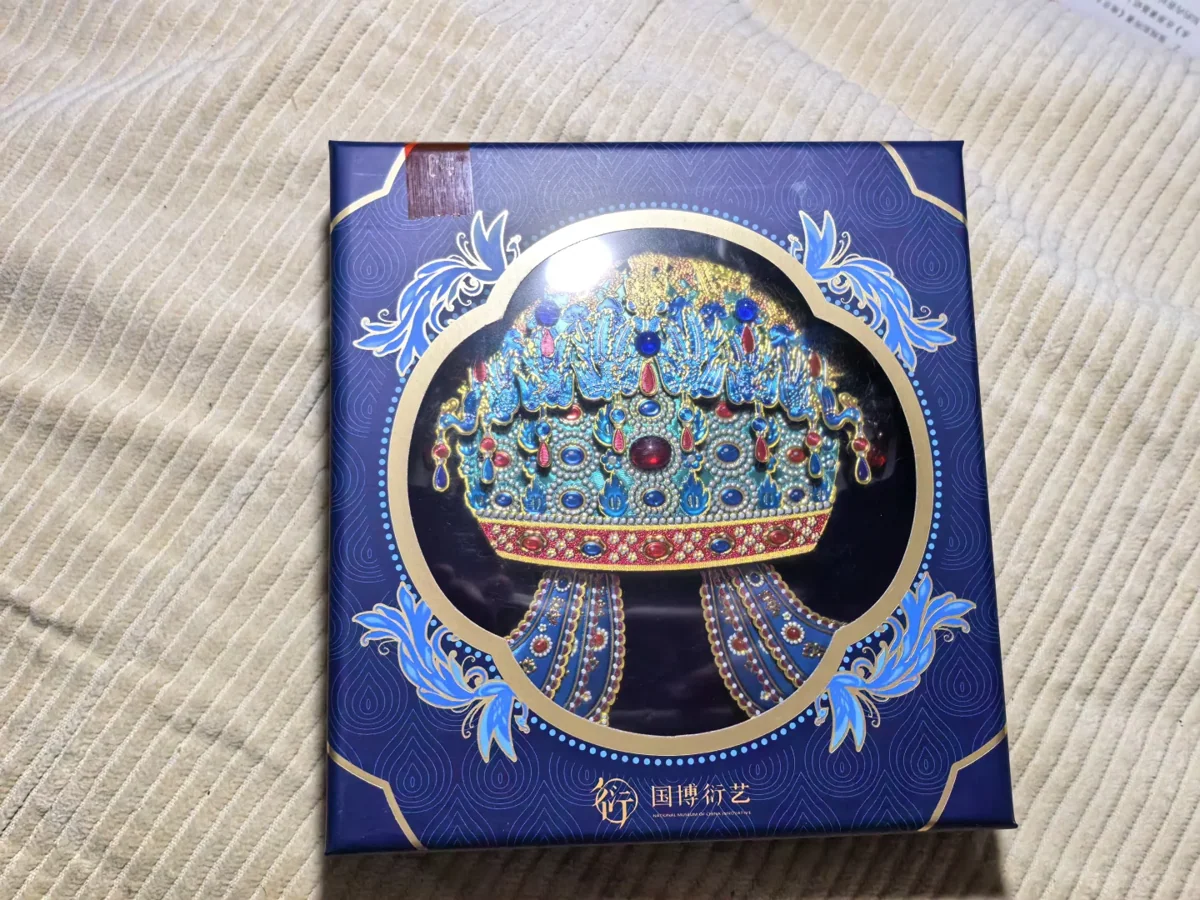
In Shanghai, there are two quite different gifts for collectors. For someone who saved their first metro ticket, Wujiaochang Station on Line 10 has a souvenir vending machine. The city reported prices of 5–59 yuan across the machine’s range, including bookmarks, magnets and keychains. For someone who collects designer toys, there is a POP MART flagship at 829 East Nanjing Road, inside Shimao Festival City. A sealed blind box gives you a random figure from a series. If a particular character is the whole point of the gift, ask for an item with the design shown on the box before paying. Shanghai Metro souvenirs · Shanghai POP MART flagship
Suzhou crafts that will fit in a carry-on
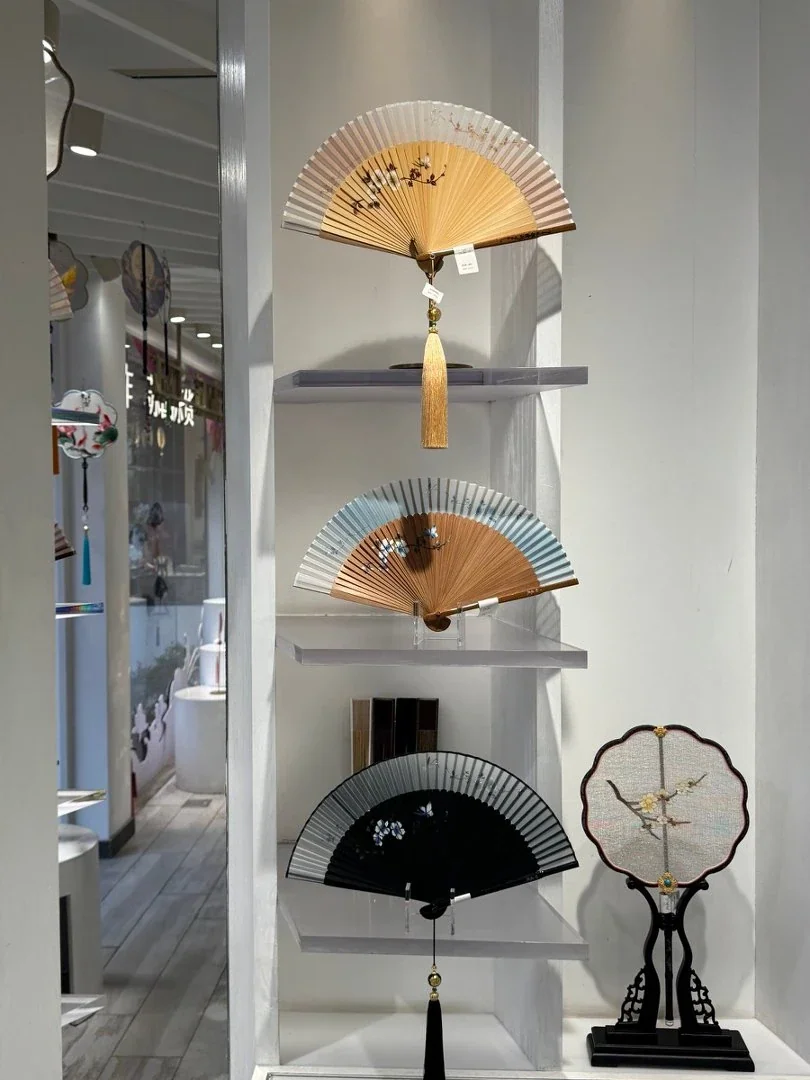
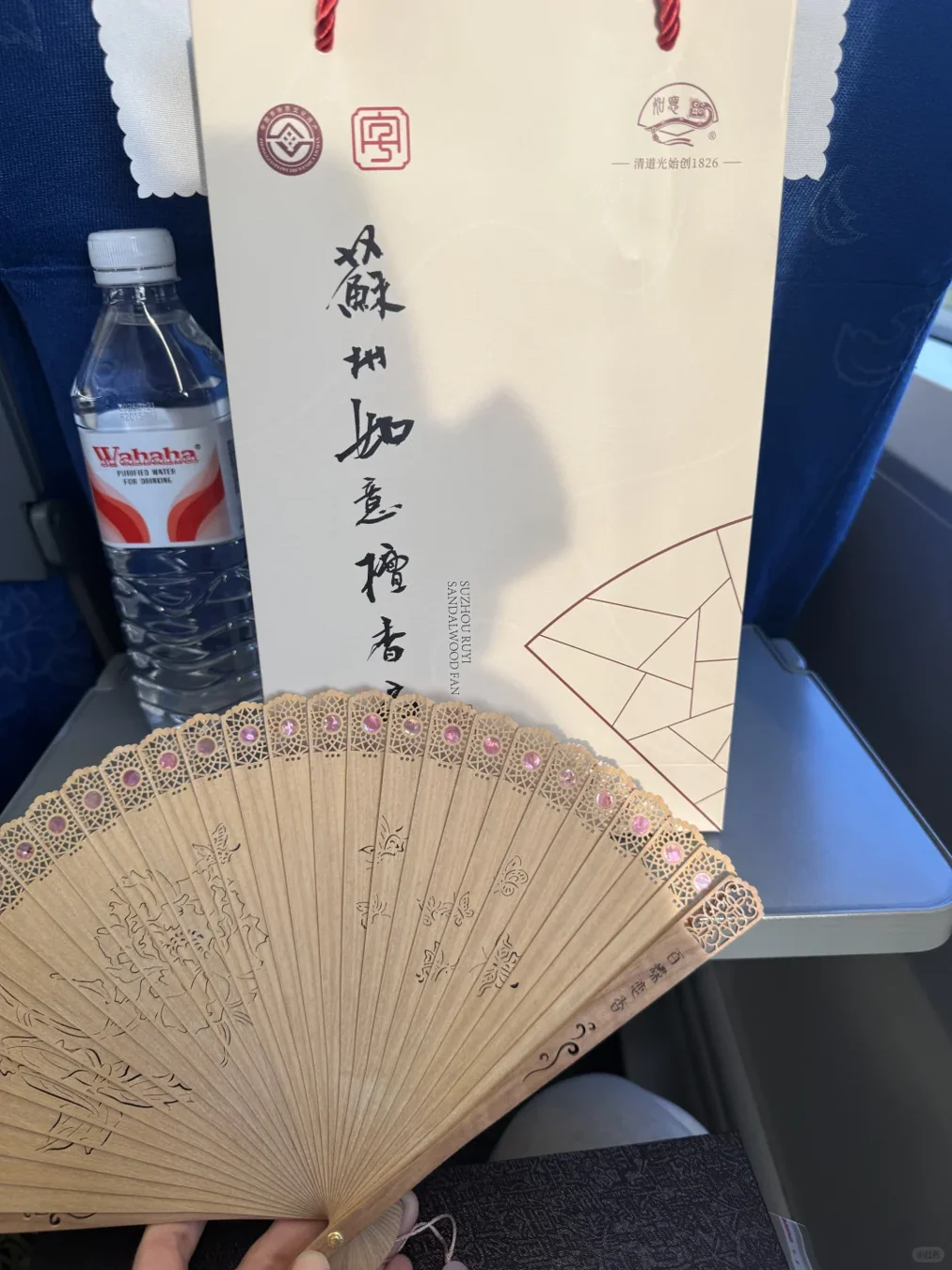
A folding fan (折扇) is a good buy if you enjoyed Suzhou’s gardens in the heat. Try opening and closing the one you’re taking home. The ribs should move smoothly and the paper should settle back into its folds. A round silk fan (团扇) is a lovely choice for display, but the frame needs a flat, rigid box. Pick a folding fan in a sleeve if you still have several train journeys ahead. Suzhou’s fan-making tradition
For someone who sews or wears scarves, start at the Suzhou Silk Museum to see what local weaving looks like, then compare scarves at a textile counter. Look for 桑蚕丝 (mulberry silk) and the fibre percentages on the sewn-in label. 聚酯纤维 means polyester. If a scarf is priced for its embroidery, ask to see the reverse and whether the design is stitched or printed. A small embroidered pouch solves the problem of guessing a colour someone would wear around their neck. Suzhou Silk Museum visitor information · Suzhou embroidery
For a wall at home, ask for a Taohuawu New Year print (桃花坞木版年画). Check the paper dimensions including the margins. A small unframed print in a cardboard folder is easier to carry, and easier for the recipient to frame to their own taste. If the price depends on the artist or technique, ask the shop to write those details on the receipt. Suzhou’s guide to woodblock prints and other gifts · Plan a day in Suzhou
When pottery or tailor-made clothing is worth the detour
In Jingdezhen, buy the cup you would actually drink from. The market at the Sculpture Porcelain Factory (雕塑瓷厂) is a place to browse contemporary handmade ceramics. Decide first what the recipient drinks. A small handleless cup works for short pours of Chinese tea. A coffee drinker may get more use from a larger mug. A gaiwan has a bowl, lid and saucer, so allow for three pieces of protective packaging. Jingdezhen’s guide to its ceramics markets
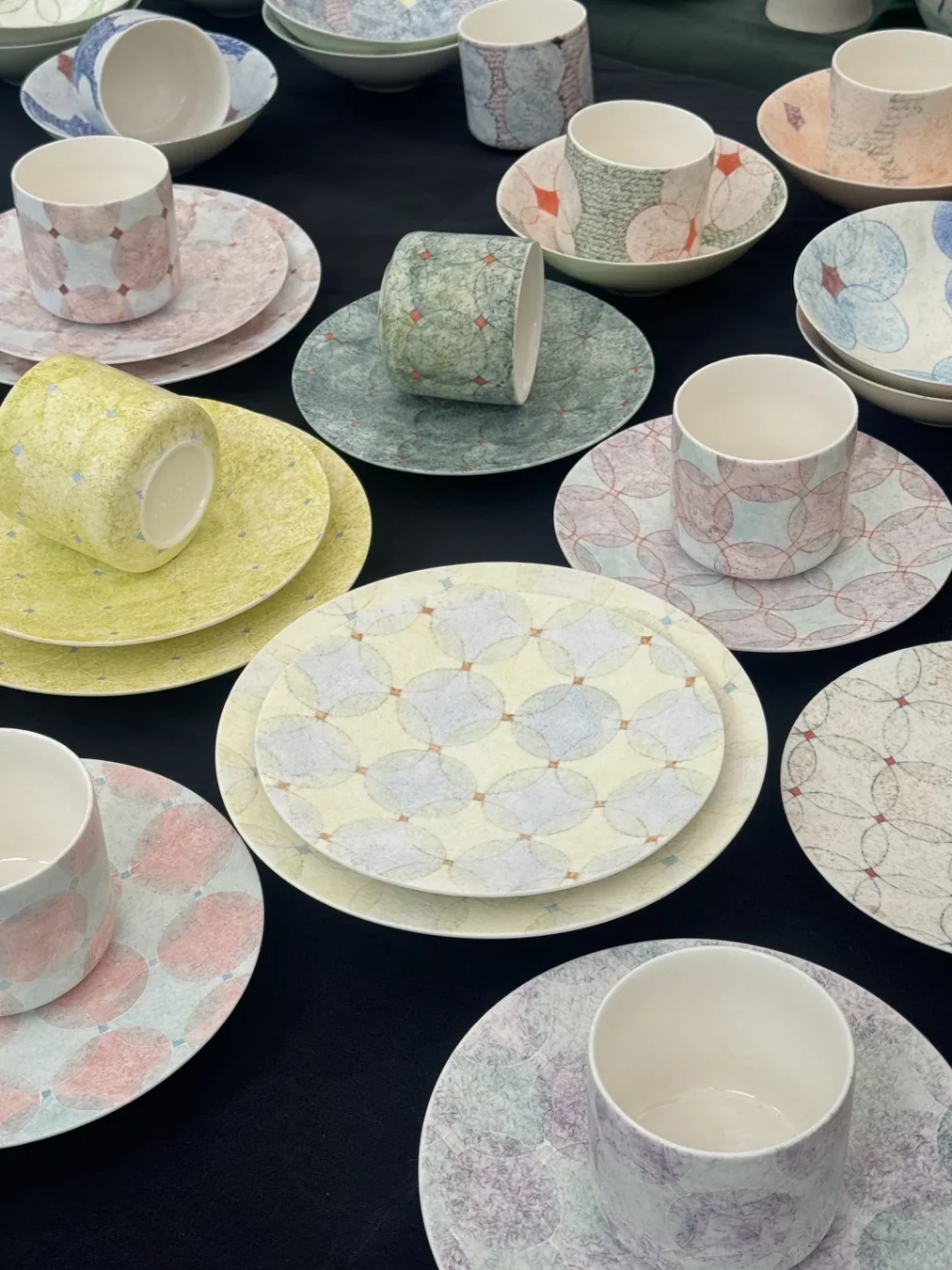
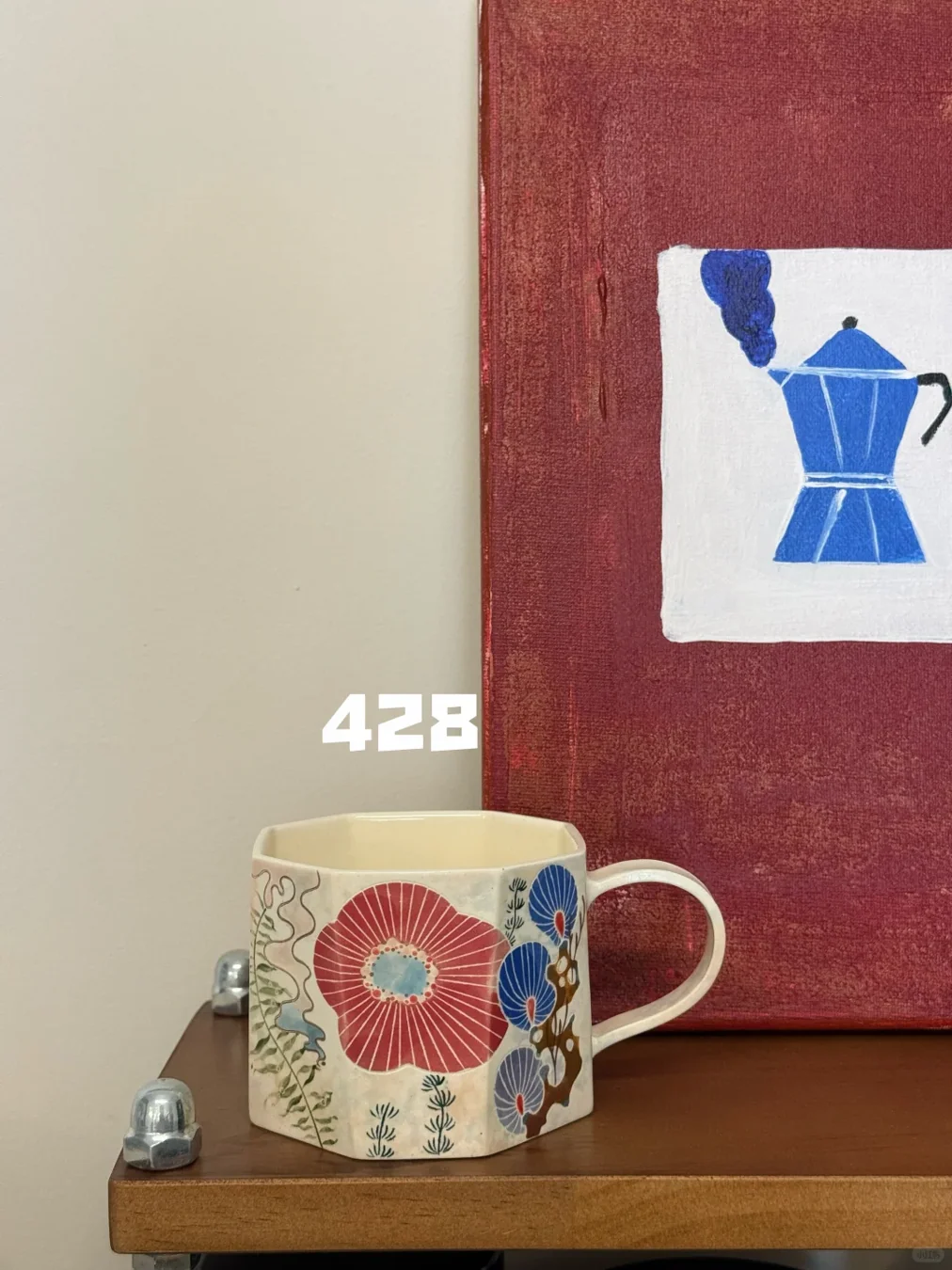
At the stall, put the cup on a flat counter to check that it sits steadily. Check the rim in good light, ask if the piece is intended for hot drinks, and have the seller wrap the lid separately. If the box rattles gently in your hands, it needs more padding. To remember the maker, photograph the studio card beside the piece before it’s wrapped. A pair of cups from the same potter can tell more of the story than a boxed six-person service you have nowhere to keep.
In Shanghai, order clothing early in your stay. The South Bund Fabric Market is at 399 Lujiabang Road (陆家浜路399号). Take a photo or a garment that already fits, pick the fabric, then agree on the total price, fitting and pickup dates before paying a deposit. Ask for the stall number and a swatch with the order. When you return, sit down in the trousers, reach forward in the jacket and check the finished sleeve length while alterations are still possible. South Bund Fabric Market address
Shanghai’s January 2026 market guide gives 2,000–4,000 yuan for a tailored suit and a typical turnaround of six to seven days. Some shops offer a two-day express service. Get the promise in writing and leave room for an adjustment before your train or flight. If this is your final afternoon, a finished scarf is the easier gift to take home. Shanghai’s guide to tailoring prices and turnaround
Where to spend your last afternoon
If you’re near East Nanjing Road in Shanghai, combine First Foodhall for sweets with the POP MART flagship for a collector. If you already have a Shanghai Museum visit booked, choose your art gifts there. Save the Line 10 souvenir machine for a journey that actually takes you through Wujiaochang. A cross-city metro trip to save a few yuan can take up the time you wanted for your last meal. Shanghai’s local gift counters
If you have 100 yuan for five people, each individual gift needs to average 20 yuan. Look at the shelf prices before committing to five identical pieces. One bag of sweets to share and a handful of postcards gives each recipient something personal to take away. If you have 100 yuan for one person, use the whole amount on something they will use: a green tea you tasted, a good folding fan or a mug that’s comfortable in the hand.
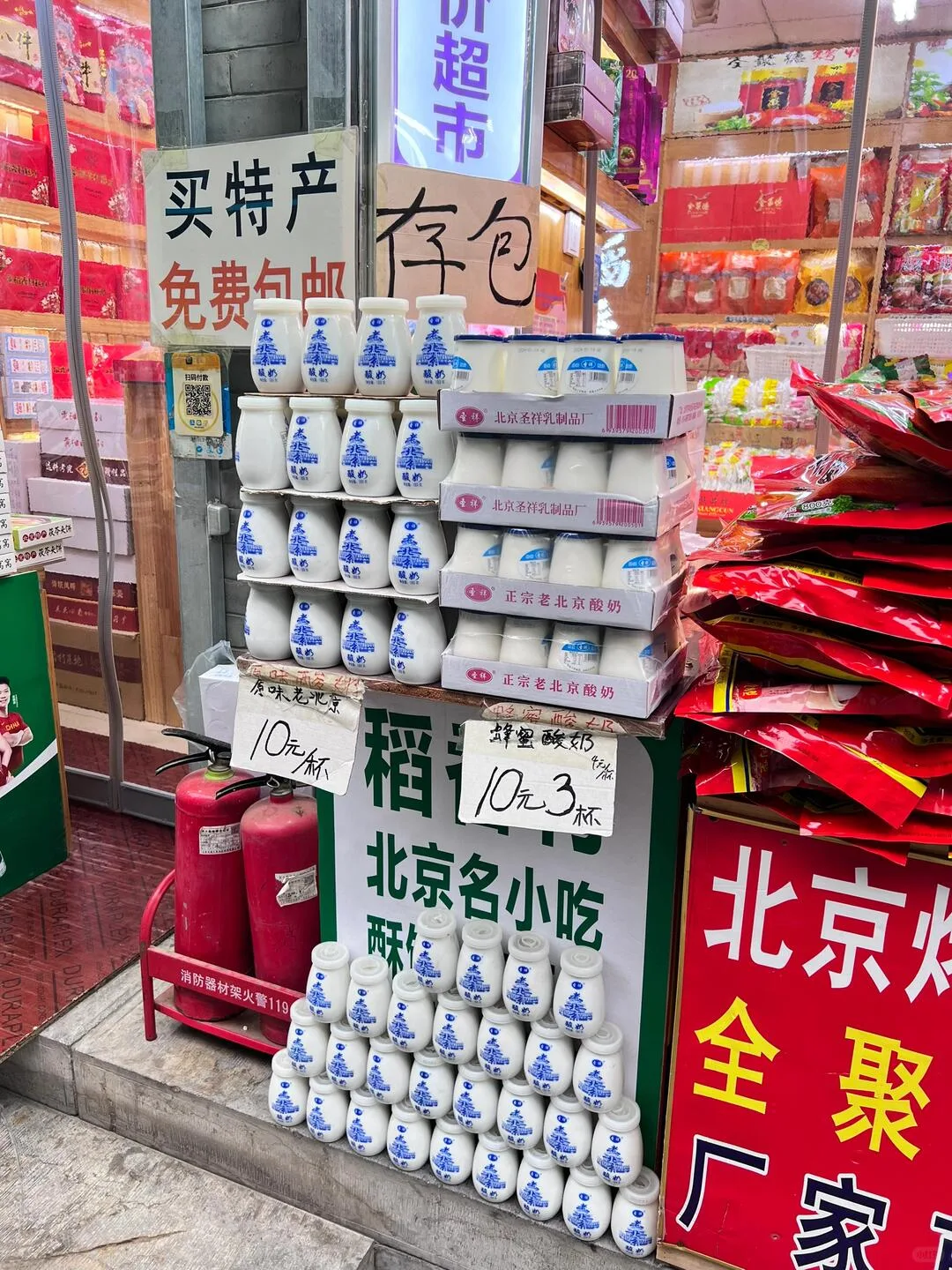
How to read a handwritten price. At the Beijing counter below, two signs both start with 10元. Look at what comes after the price. On the right, 10元3杯 means 10 yuan for three cups of the tray-packed yogurt. On the left, 10元/杯 means 10 yuan for one cup. If several products share a shelf, point to the price card and then to the item you want. Here the package and the unit explain the difference.
At a supermarket or a museum shop, start with the marked price. At an independent stall, settle the total before asking for engraving, a box or any other extra. These are useful phrases to show the seller:
| What you want to know | Show the seller |
|---|---|
| Is that the price for one piece or the whole set? | 这是一个的价格,还是一套的价格? |
| How many grams is this price for? | 这个价格是按多少克算的? |
| Is each one individually wrapped? | 每个都是独立包装的吗? |
| Can you wrap the cup and lid separately? | 杯子和盖子可以分开包吗? |
| Can I get a departure tax refund here? | 这里可以办离境退税吗? |
Tax refunds and what you can take home
Before paying for a larger gift, ask whether the shop participates in China’s departure tax refund scheme. Eligible purchases must total at least 200 yuan at one participating shop on the same day. Two 120-yuan purchases at different shops won’t reach the threshold. Bring your passport and ask the shop to issue the invoice and refund application. Keep the goods unused until departure. Shanghai Municipal Tax Service’s departure refund guide
Two dates matter. You must leave mainland China within 90 days of buying the goods and within 183 days of your most recent entry, taking the items through a designated departure port. At the airport, check the inspection instructions while the goods are still accessible. After the handling fee, the usual refund is 6% or 9% of the eligible invoice, depending on the item. On a qualifying 300-yuan invoice, that works out to 18 or 27 yuan. Official eligibility, inspection and refund calculation
For the journey home, keep the ingredient panel with any food. If you’re unsure about a pastry, look for 肉松 (meat floss), which can appear in sweet-looking baked goods. Fresh fruit, meat fillings and herbal blends deserve a destination-specific check before purchase.
- United States. USDA permits tea made solely from tea leaves, including green tea and oolong, and requires travellers to declare it. Fruit, seeds or herbs mixed into a tea can change the rules. USDA traveller guidance
- Great Britain. Most confectionery can come in from any country, with an exception for products high in unprocessed dairy ingredients. Check the separate guidance for meat, dairy or plant products if you’re carrying more than ordinary sweets. GOV.UK food guidance
- Australia. Check the exact ingredients of tea blends or seasonings against the agriculture department’s product list and declare items as required on arrival. The list has separate entries for plain tea and herbal tea. Australian biosecurity product guide
For a last-minute gift with no ingredient list to translate, a museum postcard still earns its place. Write down the city, the date and what made you stop in front of the original. That’s the part the museum shop can’t sell.